
Canon SL1 vs. T3i: Which Used DSLR Makes More Sense?
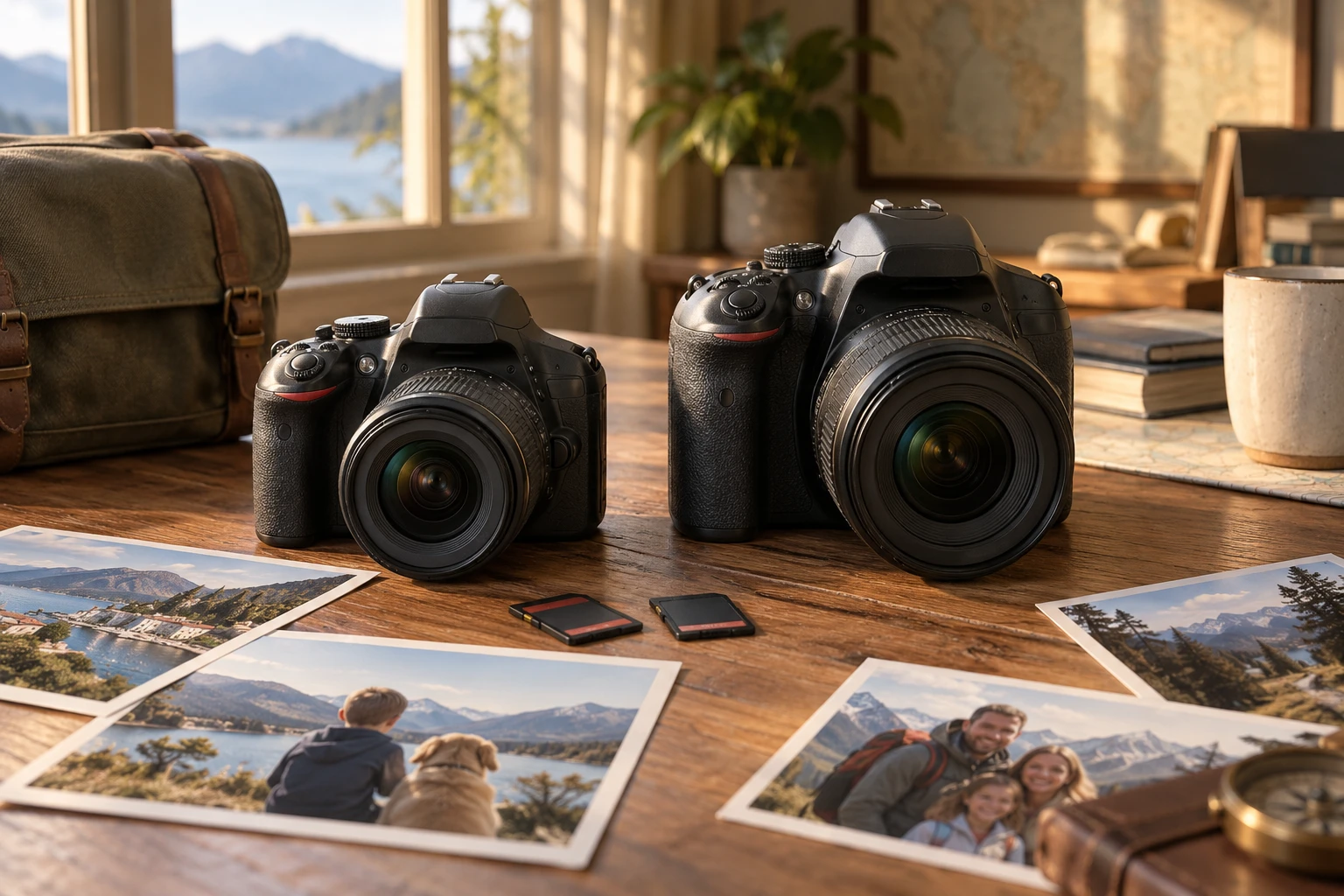
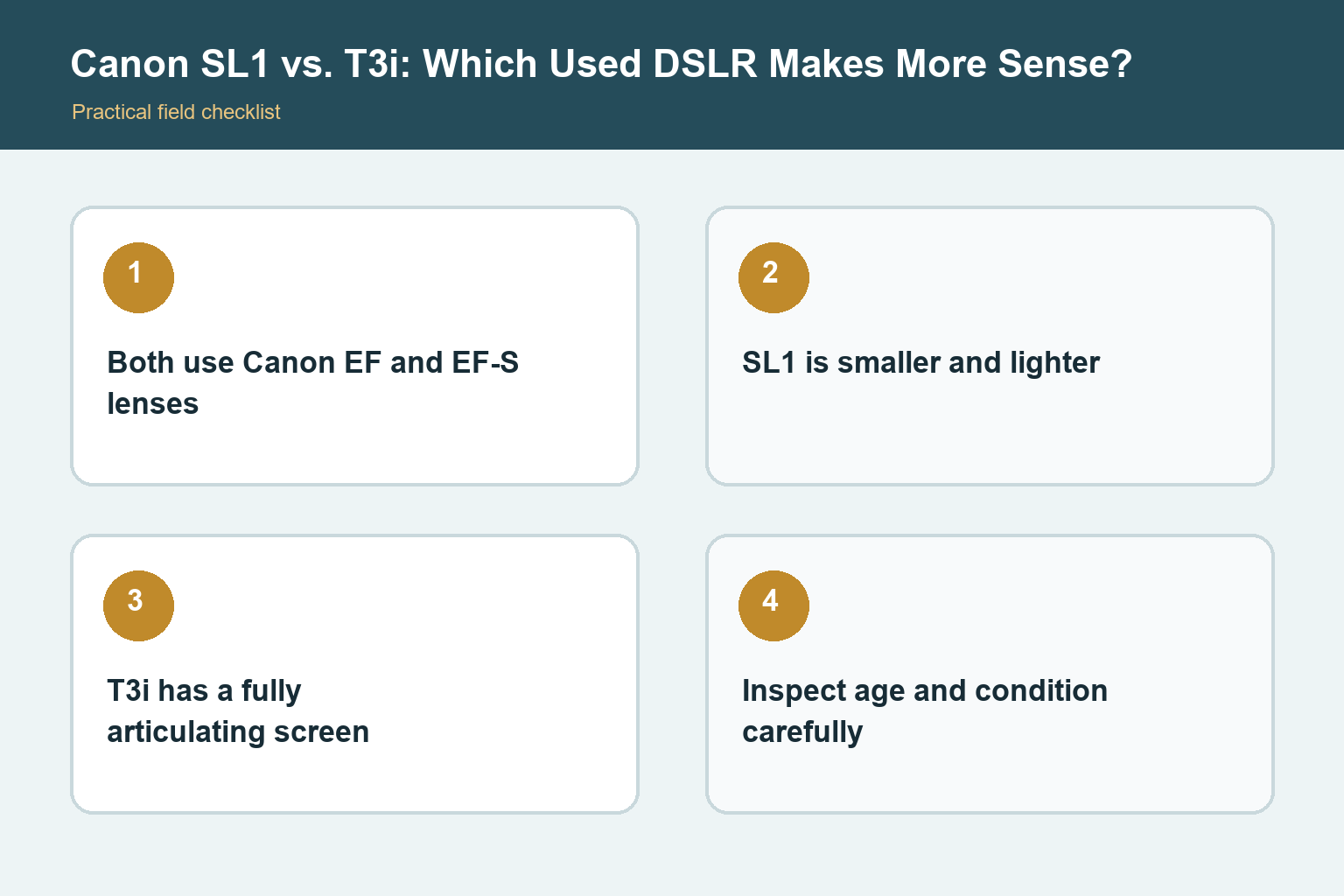
The smaller SL1 is the more convenient everyday body and offers newer live-view focusing behavior. The T3i has a larger grip and articulated screen. Condition, price, and lens quality should decide between these discontinued cameras.
Two older cameras with different strengths
The EOS Rebel SL1, also called the 100D in some markets, and the EOS Rebel T3i, also called the 600D, are discontinued APS-C DSLRs. Both can make good photographs in suitable light and accept Canon EF and EF-S lenses, but neither provides current mirrorless autofocus, connectivity, or video convenience. The SL1 emphasizes compact size and a newer generation of live-view operation. The T3i offers a larger traditional body and a screen that swings and rotates for flexible viewing.
Handling and portability
The SL1 is notably compact for a DSLR and pairs well with small lenses such as the EF-S 24mm pancake or a basic kit zoom. That makes it easier to carry, though photographers with larger hands may prefer an added grip or the T3i’s deeper body. The T3i balances somewhat better with larger lenses and gives controls more room. Handle both with the lens you intend to use, because body-only measurements do not reveal front-heavy balance or access to buttons.
Viewfinder and rear-screen shooting
Both cameras use an optical viewfinder, which shows the scene directly through the lens and consumes little power while composing. Their autofocus systems are modest by current standards, especially for action away from the central area. The T3i’s fully articulating screen is useful for overhead, low-angle, and front-facing framing. The SL1’s touchscreen and newer live-view focusing can feel more direct, but moving-subject performance remains behind a current entry-level mirrorless camera.
Still-image quality
Both use 18-megapixel APS-C sensors and can produce detailed images with good exposure and a capable lens. Differences in real output are smaller than differences caused by focus accuracy, shutter speed, light, and lens choice. RAW files provide more editing flexibility than JPEGs when exposure or white balance needs correction. At high ISO, manage expectations: modern cameras and phones may provide cleaner automated results, while these DSLRs reward careful exposure and noise reduction.
Video limitations
These bodies can record useful basic video, but neither is ideal for modern run-and-gun creation. Continuous autofocus, stabilization, audio monitoring, high-frame-rate options, and wireless transfer are limited compared with current cameras. The T3i’s articulating screen helps with framing; the SL1’s touchscreen can simplify operation. For serious video, compare a current mirrorless body before investing in batteries, microphones, rigs, or several EF-S lenses around an older body.
Battery, storage, and accessories
The two bodies do not use the same battery, so a shared-camera household should account for separate chargers and spares. Confirm the exact battery and charger in each listing. Both record to SD-family cards, but buy cards that meet the manual’s supported types and format them in the camera after files are backed up. Check that port covers, battery doors, card slots, hot shoes, pop-up flashes, and strap lugs remain sound.
How to choose a used example
Prefer the cleaner body with a trustworthy seller, return period, complete charger, healthy battery, and lens free from fungus, haze, or major impact damage. Test autofocus through the viewfinder and rear screen, every control, flash, video, card writing, and several shutter speeds. Choose the SL1 for minimum size and casual travel; choose the T3i for its larger grip and articulated screen. If prices approach a current used mirrorless kit, compare that alternative before buying.
How to make the advice useful
Begin with a real shooting problem instead of a specification. Write down the subject, typical light, needed working distance, carrying limit, and the result you want to improve. Then test one change at a time. This keeps technique, equipment, and expectations separate. Review photographs on a larger screen, compare them at the same output size, and keep notes about the setting or position that actually changed the result.
A practical test routine
Use familiar subjects before an important trip or assignment. Make photographs indoors, outdoors, in motion, and at the closest distance relevant to the task. Check focus, exposure, background, handling, and file transfer while any return period remains open. Repeat weak results before blaming the equipment. Motion blur, missed focus, poor light, dirty optics, and an unsuitable viewpoint can look similar until the variables are tested carefully.
Keep the workflow dependable
Charge and label batteries, use reputable memory cards, format cards in the camera only after files are safely copied, and keep firmware and manuals associated with the exact model. Back up important files to at least two places. Add one accessory or setting change at a time so unexpected behavior has an identifiable cause. A simple routine that you understand will produce more reliable photographs than a complicated setup copied from someone else. Before travel, repeat the complete routine from capture through backup with the exact cables, cards, applications, and storage you plan to carry. A five-minute rehearsal can reveal a missing adapter or unsupported file before it matters.
Check the result, not only the settings
After each practice session, select a small group of successful and unsuccessful frames. Compare focus at the intended viewing size, inspect highlights and shadows, and ask whether the composition communicates the subject clearly. Keep one example of each common mistake with a short note about its cause. That simple record turns trial and error into a repeatable lesson and prevents changing several controls when only one adjustment is needed. Revisit the exercise in different light before deciding that the camera or lens has reached a hard limit.
Final perspective
Photography improves when the tool, technique, and subject support one another. Treat specifications as clues rather than promises, and judge the result at the size people will actually view it. Comfort and confidence affect whether the camera leaves the bag. Whatever option you choose, practice in ordinary conditions, review mistakes without rushing, and build a small repeatable process before adding more equipment or complexity. Save a final checklist with the camera so a successful setup can be rebuilt months later. Good documentation is especially useful when several people share the equipment or when a rarely used feature must work under time pressure.
Sources and review notes
- Canon camera support and manuals