
Full-Frame vs. Crop-Sensor Cameras: What Really Changes?
Full frame can help with high-ISO work and shallow depth of field, while crop-sensor systems can reduce cost and kit size and give useful framing reach. The complete camera-and-lens system matters more than the label.
What the labels mean
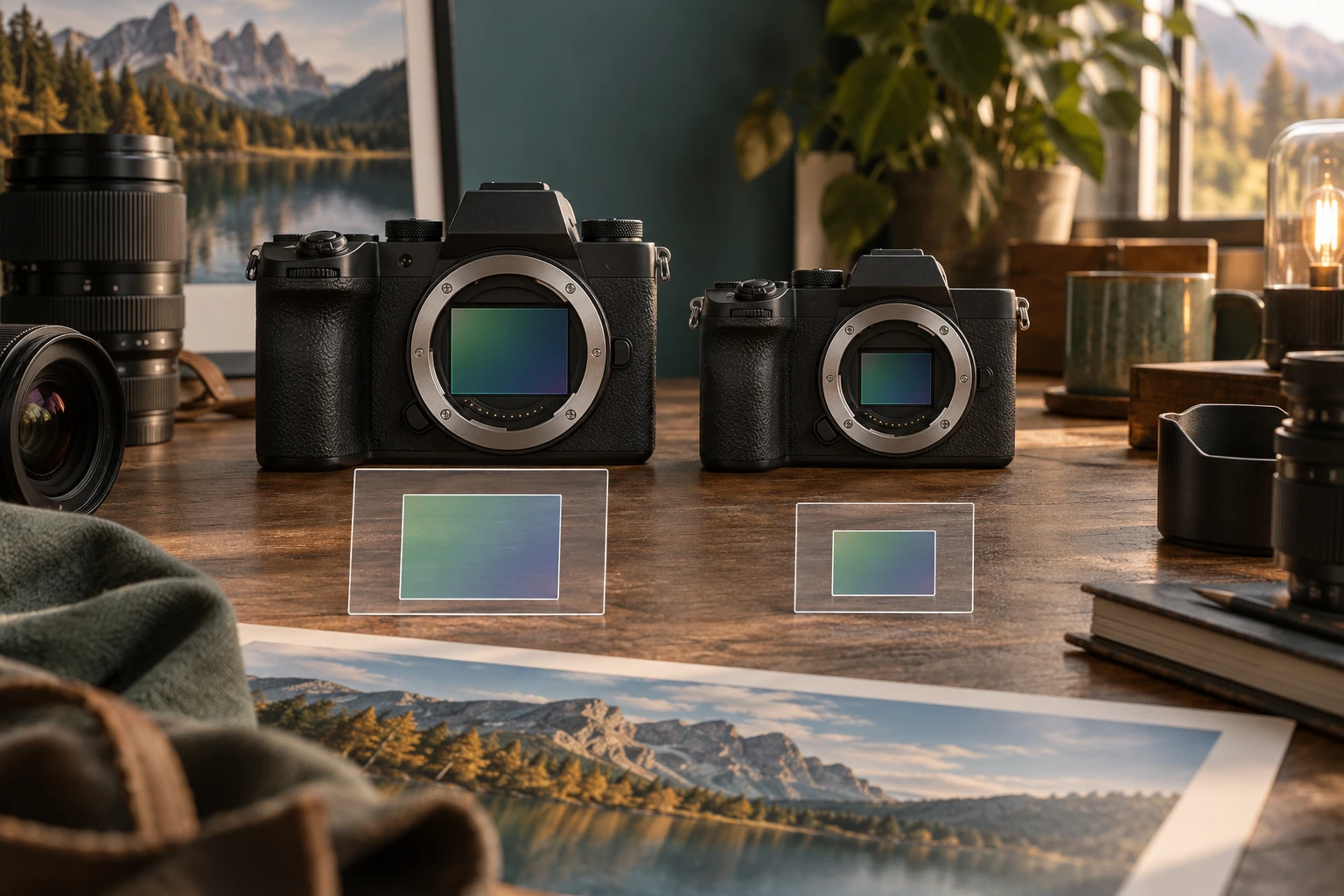
A full-frame sensor is approximately the size of a 35mm film frame, about 36 by 24 millimeters. APS-C sensors are smaller; their exact dimensions and crop factor vary by brand, commonly around 1.5x or 1.6x. Micro Four Thirds is smaller again and uses a 2x field-of-view factor relative to full frame. Crop factor does not magnify a lens. It describes how a smaller sensor records a narrower portion of the image circle when focal length and shooting position stay the same.
Field of view and equivalent framing
A 35mm lens on a 1.5x APS-C camera frames roughly like a 52.5mm lens on full frame from the same position. A 50mm lens frames roughly like 75mm. This helps compare angles of view, but it does not change the lens into a different optical design. Perspective comes from camera position. If you move backward to match framing, subject-to-background relationships change because your position changed. Compare lenses by the view and working distance you need, then consider aperture, focus distance, stabilization, and size.
Depth of field in practical terms
When cameras are placed at the same position with the same focal length and aperture, the smaller sensor simply crops the image. When photographers instead match composition using equivalent fields of view, full frame can produce shallower depth of field at the same f-number. That can help isolate a portrait subject, while the deeper depth of field of a smaller format can be useful for travel, macro, wildlife, and events where more of the subject should stay sharp. Neither look is inherently better.
Low light and dynamic range
Larger sensors can collect more total light for equivalent framing and depth of field, which often gives full frame an advantage at high ISO or when recovering difficult shadows. Sensor generation, processing, exposure, lens aperture, and output size also matter. A current crop-sensor camera with a bright lens can outperform an older full-frame body in focus reliability and may deliver cleaner final pictures because it gets the moment sharp. Compare real files at the print or screen size you will use.
Size, price, and the lens roadmap
A full-frame body is not always large, but lenses that cover a larger sensor can become bigger and more expensive, particularly bright zooms and long focal lengths. APS-C and Micro Four Thirds systems can offer smaller lenses across a practical range. Compare a complete kit: body, two or three realistic lenses, batteries, bag, filters, and computer storage. A smaller format often leaves more budget for better glass, lighting, travel, or printing, all of which may improve the work more than sensor size.
Wildlife and sports considerations
A crop sensor records a narrower field of view from a given lens, which can place more pixels on a distant subject when compared with a full-frame camera of similar total resolution. This is useful only if autofocus, shutter speed, lens sharpness, technique, and atmospheric conditions support the detail. Full frame can regain flexibility through high-resolution cropping. For action, buffer depth, viewfinder behavior, subject detection, lens handling, and battery life frequently matter more than format.
How to choose without overthinking it
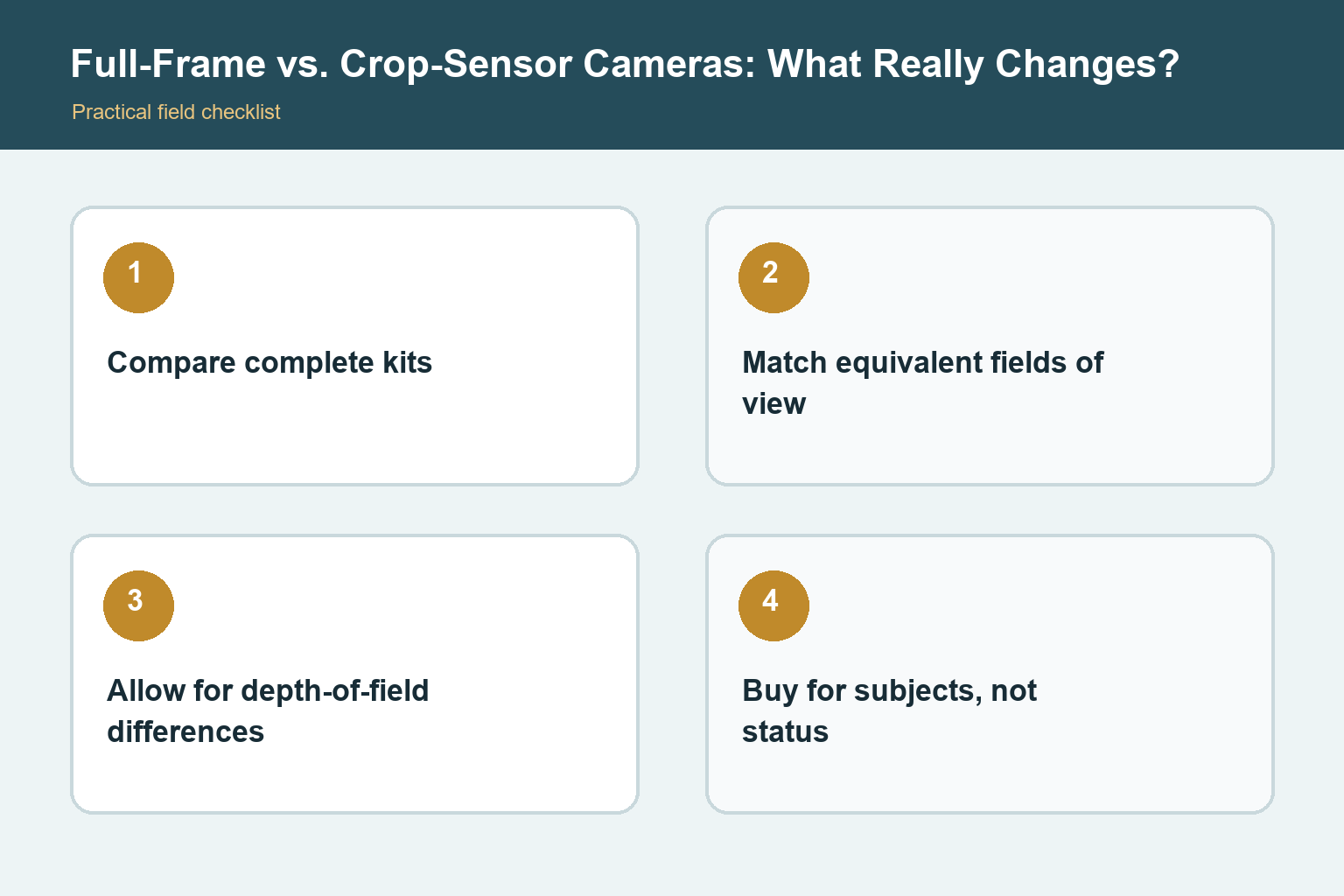
List the subjects you photograph, the light you face, the depth of field you prefer, and the weight you will carry. Price two complete systems and handle them with the intended lenses. Full frame makes sense when its low-light, shallow-focus, resolution, or professional system advantages solve a recurring need. Crop sensor makes sense when portability, budget, telephoto framing, or deeper working depth matters. Both formats can produce professional results when paired with suitable lenses and practiced technique.
How to make the advice useful
Begin with a real shooting problem instead of a specification. Write down the subject, typical light, needed working distance, carrying limit, and the result you want to improve. Then test one change at a time. This keeps technique, equipment, and expectations separate. Review photographs on a larger screen, compare them at the same output size, and keep notes about the setting or position that actually changed the result.
A practical test routine
Use familiar subjects before an important trip or assignment. Make photographs indoors, outdoors, in motion, and at the closest distance relevant to the task. Check focus, exposure, background, handling, and file transfer while any return period remains open. Repeat weak results before blaming the equipment. Motion blur, missed focus, poor light, dirty optics, and an unsuitable viewpoint can look similar until the variables are tested carefully.
Keep the workflow dependable
Charge and label batteries, use reputable memory cards, format cards in the camera only after files are safely copied, and keep firmware and manuals associated with the exact model. Back up important files to at least two places. Add one accessory or setting change at a time so unexpected behavior has an identifiable cause. A simple routine that you understand will produce more reliable photographs than a complicated setup copied from someone else. Before travel, repeat the complete routine from capture through backup with the exact cables, cards, applications, and storage you plan to carry. A five-minute rehearsal can reveal a missing adapter or unsupported file before it matters.
Check the result, not only the settings
After each practice session, select a small group of successful and unsuccessful frames. Compare focus at the intended viewing size, inspect highlights and shadows, and ask whether the composition communicates the subject clearly. Keep one example of each common mistake with a short note about its cause. That simple record turns trial and error into a repeatable lesson and prevents changing several controls when only one adjustment is needed. Revisit the exercise in different light before deciding that the camera or lens has reached a hard limit.
Final perspective
Photography improves when the tool, technique, and subject support one another. Treat specifications as clues rather than promises, and judge the result at the size people will actually view it. Comfort and confidence affect whether the camera leaves the bag. Whatever option you choose, practice in ordinary conditions, review mistakes without rushing, and build a small repeatable process before adding more equipment or complexity. Save a final checklist with the camera so a successful setup can be rebuilt months later. Good documentation is especially useful when several people share the equipment or when a rarely used feature must work under time pressure.
Sources and review notes
Editorial note: This educational guide intentionally contains no affiliate product links.