
Reviewed and updated: October 15, 2026
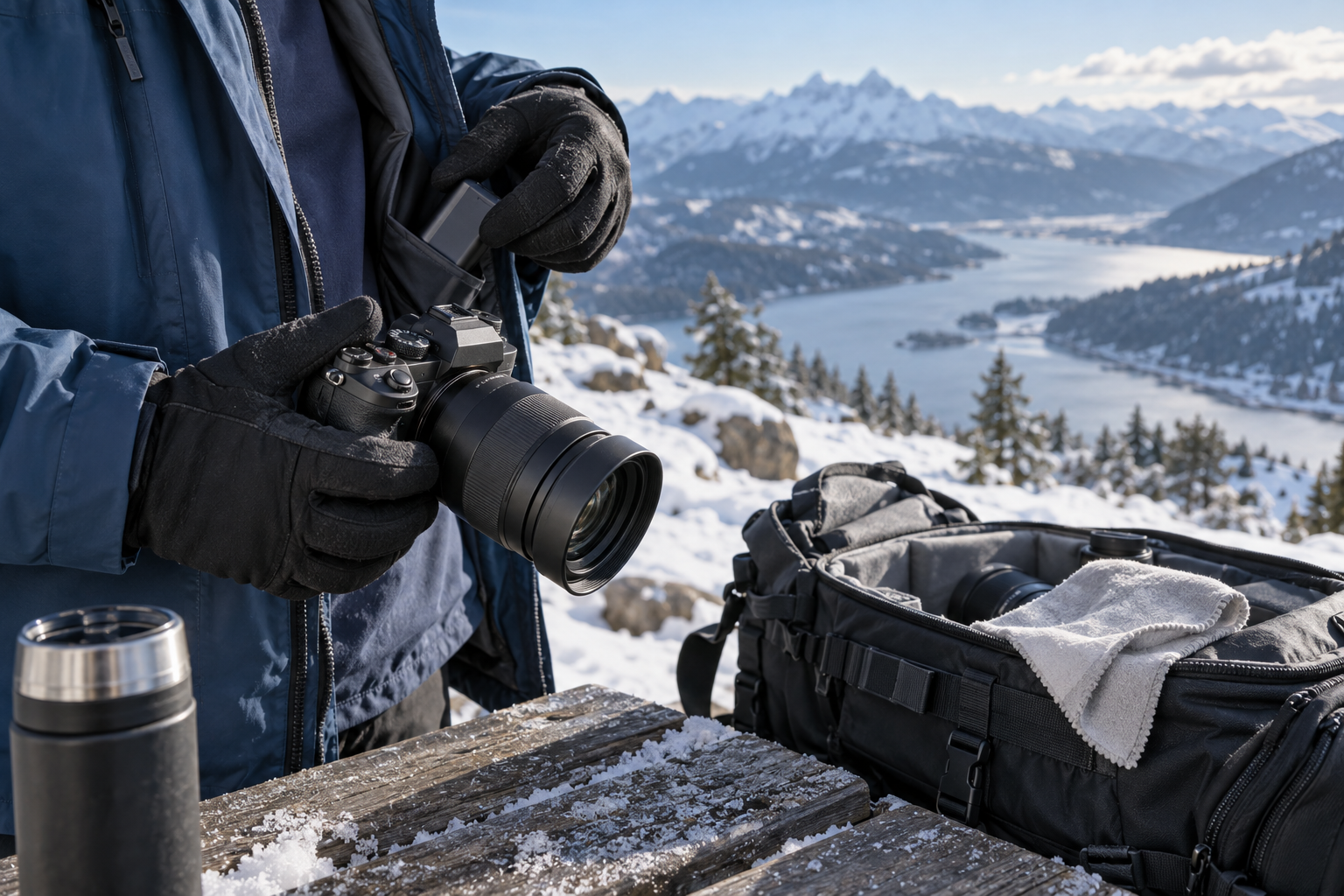
Check the operating range
Read the camera, lens, battery, and accessory manuals before a winter trip. Weather sealing does not mean waterproof, freezeproof, or maintenance-free. Manufacturers publish different operating and storage temperatures. Build the plan around the least tolerant component, including flash units, microphones, gimbals, and memory-card readers.
Carry batteries close to the body
Lithium-ion batteries often deliver less runtime in the cold. Keep charged spares in an inner pocket inside separate protective cases so terminals cannot contact metal. Rotate them methodically and warm a depleted battery gradually. Never heat a battery with a hand warmer, heater vent, fire, or direct sunlight.
Minimize unnecessary lens changes
Snow, wind, and gloves make mount changes risky. Choose the likely lens before leaving shelter and keep the camera pointed downward during a necessary swap. Brush loose snow from the bag first. Do not breathe onto a frozen lens; moisture from breath can freeze on the glass and leave residue.
Manage snow as moisture
Use the manufacturer-approved rain or snow cover and keep ports closed. A lens hood helps shield the front element. Carry clean, dry microfiber cloths in sealed bags and blot moisture rather than grinding ice across a coating. If snow enters a compartment or port, power down and follow official service advice.
Operate controls with intention
Gloves can press buttons accidentally or weaken your grip. Practice the key controls indoors while wearing them. Use a secure strap that works over winter clothing and place the bag on a stable surface. Avoid forcing a stiff zoom ring, card door, or battery latch; cold materials can be less forgiving.
Prevent condensation indoors
Before entering a warm building, place the cold camera and lens in a closed camera bag or sealed plastic bag while still outside. Let the equipment warm gradually before opening it. Moisture should condense on the bag, not inside the camera. The required time depends on the temperature difference and equipment mass.
Separate wet accessories
A damp strap, cover, glove, or cloth can raise humidity inside the bag. At the end of the outing, isolate wet items and allow them to dry safely. Do not pack melting snow beside spare batteries or cards. Silica gel can help only when it is fresh and used according to the bag maker’s guidance.
Review the kit after every trip
Once everything reaches room temperature, inspect mounts, seals, contacts, the lens surface, and the bag. Recharge batteries under normal indoor conditions, copy files to two locations, and note any unusual error or sudden power drop. A repeatable post-trip routine catches small problems before the next cold-weather assignment.
A practical one-week plan
Use this guide as a short experiment rather than changing everything at once. Read the full process, choose the first step that addresses a real problem, and note what you are trying to learn. A written plan makes the result easier to judge and prevents an enthusiastic first day from turning into an inconsistent routine.
- Check the operating range: write down the one choice you will test, keep the other variables steady, and review the result before adding another change.
- Carry batteries close to the body: write down the one choice you will test, keep the other variables steady, and review the result before adding another change.
- Minimize unnecessary lens changes: write down the one choice you will test, keep the other variables steady, and review the result before adding another change.
- Manage snow as moisture: write down the one choice you will test, keep the other variables steady, and review the result before adding another change.
- Operate controls with intention: write down the one choice you will test, keep the other variables steady, and review the result before adding another change.
- Prevent condensation indoors: write down the one choice you will test, keep the other variables steady, and review the result before adding another change.
- Separate wet accessories: write down the one choice you will test, keep the other variables steady, and review the result before adding another change.
- Review the kit after every trip: write down the one choice you will test, keep the other variables steady, and review the result before adding another change.
Review the result
At the end of the week, compare the outcome with your starting point. Keep the steps that were easy, safe, and useful. Revise anything that depended on guesswork, caused discomfort, or was difficult to repeat. When a product manual, care label, venue rule, or healthcare professional gives more specific direction, follow that guidance over a general article.
The best routine is understandable enough to explain and simple enough to perform the same way next time. Save the relevant links, keep a short note with the equipment or product, and schedule another review when conditions change. That small record turns a one-time tip into a dependable habit.
Questions to ask before the next attempt
What changed, what stayed constant, and what evidence supports the conclusion? Was the starting condition documented clearly? Did convenience or expectation influence the result? Answering those questions keeps the next attempt focused. It also helps another family member follow the same process without relying on memory or assumptions.
Take a fresh look in normal conditions rather than judging immediately. Note any safety warning, maintenance need, or storage issue that surfaced. If the result is unclear, repeat the smallest reasonable test instead of making several adjustments together. Consistency is more informative than complexity, and stopping is always appropriate when instructions, comfort, or safety are uncertain.
Keep the routine easy to audit
Store the instructions, notes, and any relevant model or product details in one place. Date the note so an older recommendation is not mistaken for current guidance. Before repeating the routine, confirm that the equipment, garment, product, location, or personal circumstances have not changed. Small differences can matter, and a quick review is usually easier than correcting a preventable mistake afterward.
Share the plan with anyone else who may use it. Clear steps reduce improvisation and make it easier to notice wear, discomfort, unexpected results, or missing information. Retire a step that no longer serves a purpose, and avoid adding a new purchase merely to make the routine look complete. Practical care comes from attention, appropriate limits, and decisions that can be explained.
Finally, revisit the original goal before calling the process finished. A routine is successful when it solves the stated problem safely and predictably, not when it contains the most steps. Keep the evidence that helped, discard assumptions that did not hold up, and make the next decision from the result you actually observed.