
Reviewed and updated: November 17, 2026
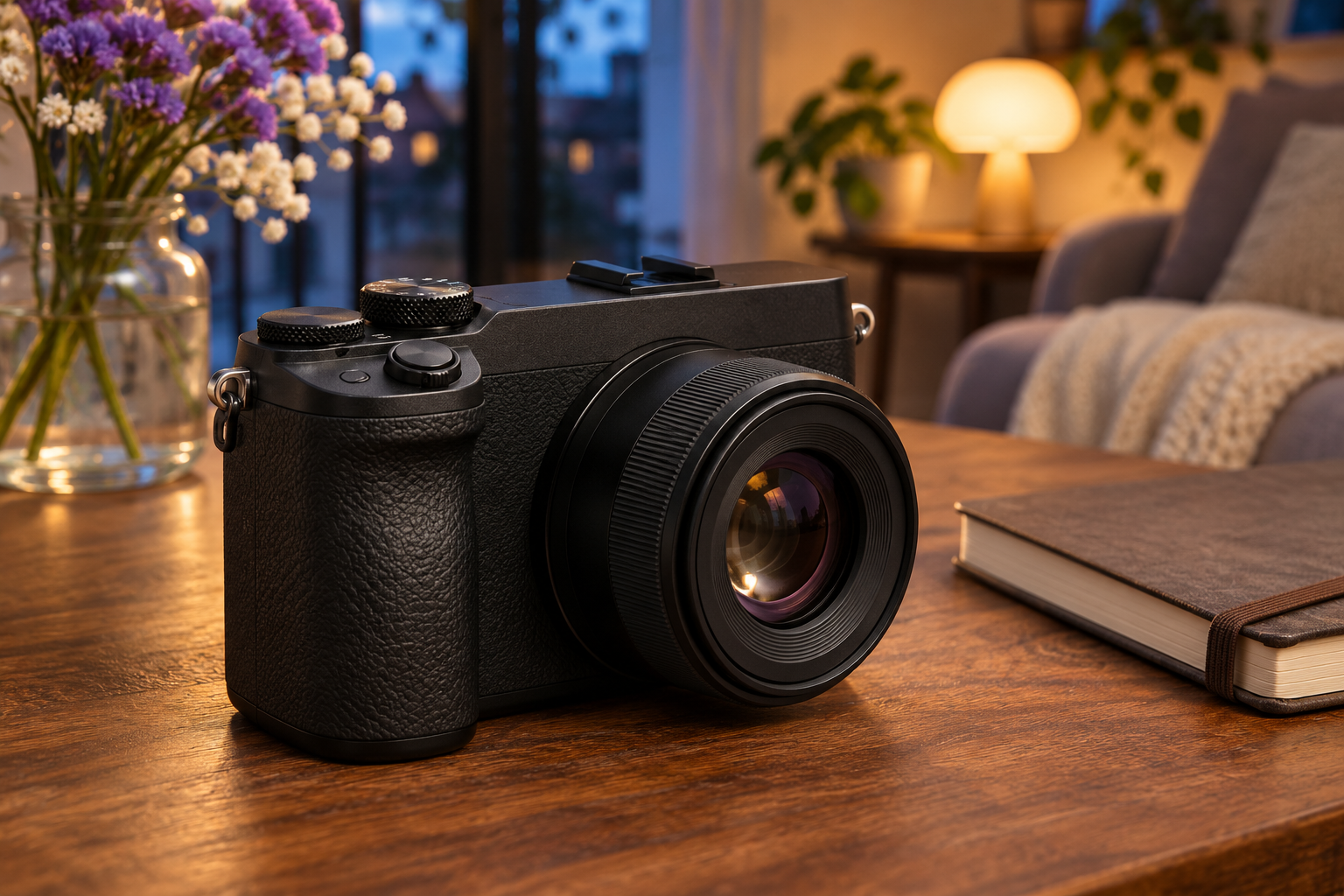
Evening photographs around the table are a persuasive reason to add Nikon’s NIKKOR Z DX 24mm f/1.7 to your camera. We recommend this small prime for a DX-format Nikon Z kit when you enjoy photographing people, familiar places and everyday details, especially indoors. Its bright aperture gives you more freedom as the light fades, and its modest size suits a camera you want to take along. The compromise is a fixed view: you gain that brightness without the framing flexibility of a zoom.
That makes it an appealing companion to a kit lens, rather than an automatic replacement. Your zoom can still handle the wide room shot and the tighter detail from across the table. The 24mm earns its place when you want to work with the light that’s already there, separate a subject from the background or head out with one uncomplicated lens.
A comfortable view of everyday life
On a Nikon DX camera, the 24mm gives you an angle of view equivalent to a 36mm lens on full frame. It’s a useful middle ground for pictures that include both a subject and a little of their surroundings. You can photograph someone beside a window without reducing the scene to a close-up of their face, or show a favourite chair in the room that makes it inviting.
The view is wider than a traditional portrait lens, but it doesn’t push you towards the exaggerated foregrounds of an ultra-wide. That versatility is the strongest reason we’d consider it as an everyday prime. A short walk, a casual meal and a small still life can all belong to the same afternoon with the camera, without each demanding a different lens.
A fixed focal length also changes your rhythm. You decide where to stand and what belongs in the picture instead of immediately reaching for a zoom ring. That can be enjoyable when you have time to explore a scene. At an event where you’re confined to one position, however, the zoom’s flexibility is more useful than the idea of travelling with fewer controls.
Why f/1.7 is the real attraction
The large maximum aperture is what makes this lens more than another way to frame a familiar view. Compared with a slower kit zoom at a similar focal length, f/1.7 lets you use a faster shutter speed or a lower ISO for the same exposure. For people chatting or a pet shifting position indoors, that extra room with shutter speed can matter more than adding another zoom range to your bag.
You also have more control over how much of the scene stays in focus. A cup, a flower or a person’s face can stand apart from a softer background, while the wider composition still gives the photograph a sense of place. That is an attractive combination for everyday pictures: you can simplify a busy room without losing all the character that made you want to photograph it.
Opening all the way to f/1.7 isn’t compulsory. A group around a table may need more depth of field than one person sitting by a window, and a detailed scene may look better with more of it sharp. The benefit is having the brighter setting available when it serves the picture, then stopping down when the subject calls for a different balance.
It isn’t a substitute for lens-based stabilisation, which this lens doesn’t include. A bright aperture helps you reach a faster shutter speed; stabilisation addresses movement of the camera during the exposure. For stationary subjects in dim light, a supported camera remains useful. For moving subjects, the ability to shorten the exposure is the more relevant advantage.
Nikon NIKKOR Z DX 24mm f/1.7
An appealing everyday prime for your Nikon DX camera when you want more freedom with available light and softer backgrounds.
Find in Amazon (paid link)
Small enough to leave on the camera
At approximately 135g and 40mm long, the 24mm keeps the appeal of a compact Nikon kit intact. We’d be more inclined to leave it attached for an ordinary outing than to reserve it for a carefully planned photography trip. A lens with a clear everyday role has a better chance of being with you when the light or a fleeting expression makes a picture worth taking.
The controls are similarly restrained. A single ring handles manual focus or a camera-assigned setting such as aperture, depending on the camera mode and configuration. You don’t get a collection of dedicated switches or a separate marked aperture ring. That suits a small lens used mostly through the camera’s controls, though you may prefer more direct adjustment for a more deliberate filming setup.
A hood is supplied, and the lens takes 46mm screw-in filters. Those are useful practical touches without adding much complexity to the purchase. The hood can help shield the front element from stray light; it isn’t a weather cover. Keep the lens dry and protect the camera in poor weather, rather than treating a small everyday kit as equipment you can leave exposed to rain.
More than distant scenes
Close focusing broadens the lens’s appeal beyond people and streets. It focuses down to 18cm, measured from the camera’s sensor plane, letting you make a foreground detail important within a wider picture. A small arrangement on a desk or flowers beside a window can become a satisfying subject without changing to a specialist lens.
Its maximum reproduction ratio is 0.19x, so this is close-up flexibility rather than a replacement for a macro lens. We’d enjoy that ability for a larger detail with some surroundings still visible. Tiny subjects that need to fill the frame are a different purchase decision, and the short focusing distance alone shouldn’t persuade you otherwise.
For video, Nikon’s stepping-motor autofocus and design to reduce focus breathing make the lens worth considering for a small indoor setup. Reduced breathing means less change in framing as focus shifts, although it can still be noticeable at some distances. The 24mm view is more comfortable when you can position the camera a little way from you than when you need a very wide arm’s-length selfie view.
Where it fits beside other Nikon lenses
This is a native Nikon Z-mount lens designed for the smaller DX sensor. It’s the DX everyday view that makes the recommendation work; it isn’t a full-frame-coverage upgrade for an FX kit. It also won’t mount on a Nikon DSLR. Those distinctions matter more than the fact that several Nikon lenses share similar focal-length numbers.
The NIKKOR Z 40mm f/2 is a useful alternative when you prefer a tighter picture. On DX it gives a 60mm-equivalent view, making it more appealing for individual people and details with room to stand back. It also covers full frame. We’d favour the 24mm for a shared everyday lens in smaller spaces, and the 40mm when that more selective framing is what you enjoy.
Our verdict
The NIKKOR Z DX 24mm f/1.7 makes a convincing addition when your Nikon kit needs a small lens for the photographs between bigger outings. Its familiar view, bright aperture and close focusing work together around people and everyday scenes. Keep your zoom for changing distances; add this prime when you want more freedom with available light and a compact camera you’ll be happy to bring.