
Reviewed and updated: October 20, 2026
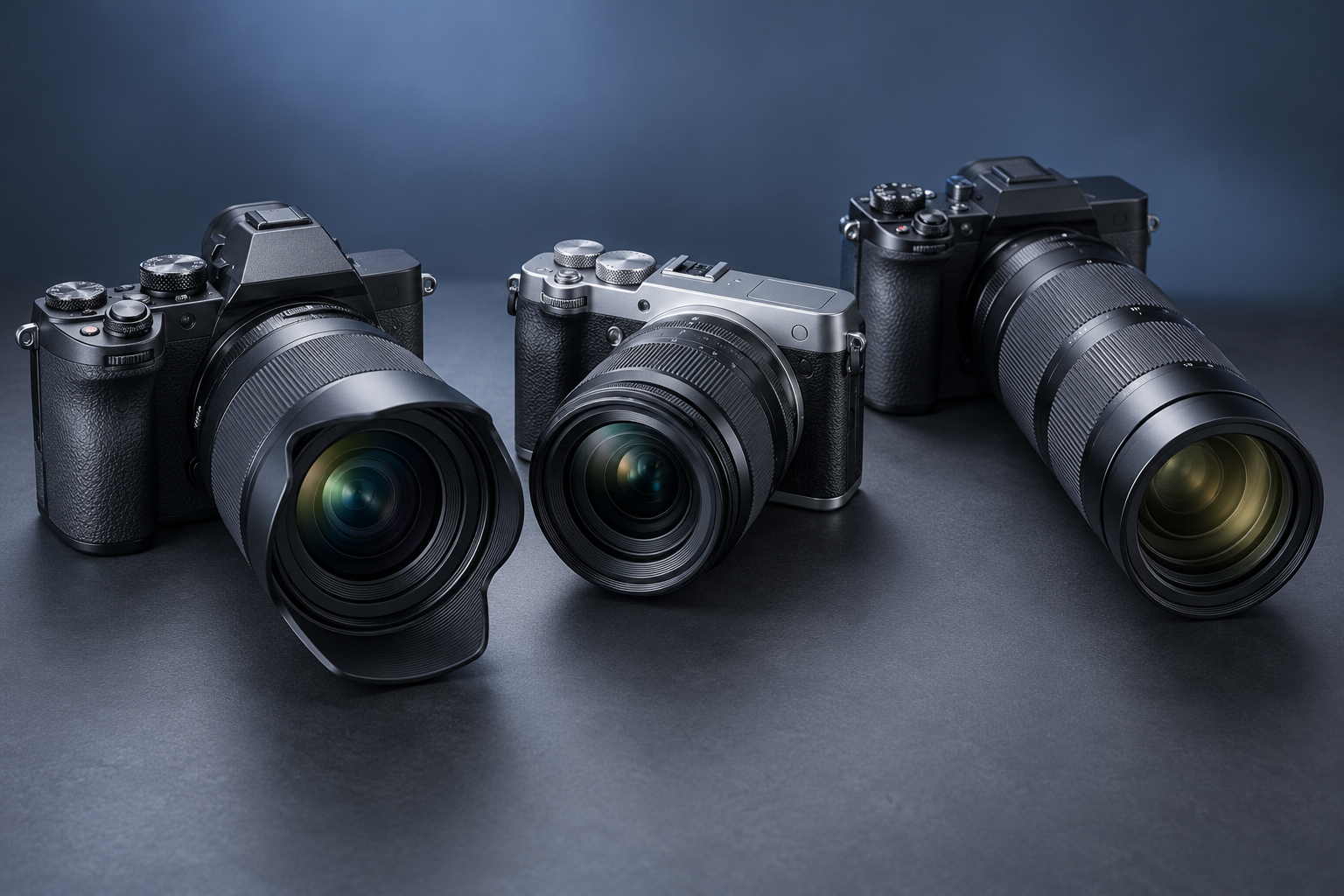
An all-in-one APS-C zoom can reduce lens changes while traveling, but mount, crop range, stabilization, size, aperture, and weather guidance must match the exact camera and trip.
This guide was reviewed against current official product information where a model is discussed. Specifications and packages can change, so verify the exact label or manufacturer page before acting.
Confirm the camera mount
Canon RF-S, Nikon Z DX, and Sony E lenses do not interchange. Read the exact camera model and mount before comparing focal lengths. An adapter may change handling, compatibility, or autofocus behavior and should not be assumed. Use the manufacturer compatibility information for the body, lens, firmware, and region.
Translate the focal range
Canon's RF-S 18-150mm, Nikon's NIKKOR Z DX 18-140mm VR, and Sony's E 18-135mm OSS all cover wide-to-telephoto travel ranges on APS-C bodies. The field of view differs by system crop factor. Compare the pictures you actually make rather than treating the largest millimeter number as automatically best.
Understand the aperture tradeoff
These compact travel zooms use variable maximum apertures, so less light reaches the sensor at the long end than with a bright prime or professional zoom. That can mean higher ISO or slower shutter speed indoors. Check the exact aperture range and decide whether convenience outweighs low-light or background-blur priorities.
Check stabilization as a system
The Canon RF-S 18-150mm includes optical image stabilization, Nikon labels the 18-140mm with VR, and Sony lists OSS for the 18-135mm. Stabilization helps camera shake but does not freeze subject movement. Body and lens combinations vary, so verify how the exact camera coordinates stabilization.
Compare size, controls, and close focus
Look at weight, retracted length, filter size, zoom direction, control rings, focus switches, minimum focus distance, and maximum magnification. A lens carried all day should balance on the actual body. Close-focus ability can add useful food, detail, and flower pictures without a separate macro lens, within its limits.
Review sealing and travel conditions
Weather-resistant wording differs among brands and is never permission to soak equipment. Read the lens and camera manuals together, use a protective bag, and avoid changing lenses in dust or spray. Condensation, impact, and salt can damage gear even when marketing mentions outdoor use.
Plan for image quality limits
A broad zoom range may show more distortion, softer corners, or slower apertures than specialized lenses. Modern cameras can apply corrections, but RAW workflows and third-party software may differ. Review current independent sample images at the focal lengths you use, and test focus and decentering during the return period.
Choose by system and trip
Choose Canon RF-S 18-150mm for a compatible RF-S travel kit, Nikon Z DX 18-140mm VR for Nikon DX Z bodies, or Sony E 18-135mm OSS for APS-C E-mount. Verify official specifications first, then compare exact paid Amazon listings. Availability remains unverified while Amazon API eligibility is blocked.
Quick checklist
- Match the exact camera mount.
- Compare useful field of view.
- Accept the variable-aperture tradeoff.
- Verify stabilization compatibility.
- Check carry weight and controls.
- Read weather and care guidance.
Why these checkpoints matter
- Match the exact camera mount. This defines the starting condition and prevents the rest of the process from resting on an assumption.
- Compare useful field of view. This narrows the choice to evidence you can verify on the exact label, model, or scene.
- Accept the variable-aperture tradeoff. This checkpoint reduces avoidable risk before another variable is introduced.
- Verify stabilization compatibility. This keeps the routine compatible with the person, product, material, or equipment involved.
- Check carry weight and controls. This creates a repeatable step instead of relying on memory or marketing language.
- Read weather and care guidance. This final review catches changes in condition, availability, or instructions before the next use.
Common questions
Can these lenses fit full-frame bodies?
Some systems allow a crop mode, but coverage, resolution, and handling change; verify official compatibility.
Does stabilization stop moving subjects?
No. It reduces camera shake; shutter speed still has to suit subject motion.
Is a travel zoom sharper than a prime?
Not necessarily. It trades some specialization for range and fewer lens changes.
Official product references
Compare current Amazon listings
Canon RF-S 18-150mm
Confirm the exact product, model or size, package contents, seller, current price, and availability.
Check current Amazon listings (paid link)(paid link)
Nikon Z DX 18-140mm VR
Confirm the exact product, model or size, package contents, seller, current price, and availability.
Check current Amazon listings (paid link)(paid link)
Sony E 18-135mm OSS
Confirm the exact product, model or size, package contents, seller, current price, and availability.
Check current Amazon listings (paid link)(paid link)
Keep the decision useful
Write down the exact model, label, starting condition, and result. Change one variable at a time and return to the official instructions when anything is unclear. A short record makes the next decision easier and keeps an isolated result from becoming a rule that does not fit a different product, person, material, or environment.
Review the information again before repeating the process. Stop when comfort, safety, condition, or the manufacturer’s instructions provide a reason to stop. A useful routine stays simple because every step answers a real question.
For the next attempt, note what improved, what remained uncertain, and what should stay unchanged. This final check reduces guesswork and helps small problems become visible before they turn into repeated mistakes.
Keep the original instructions, model information, and observations together. Before repeating the process, confirm that the product, setting, environment, and intended result are still the same.
Use the result as one observation rather than a promise. Conditions change, and the safest next step is the one supported by the current label, manual, evidence, and the limits you can verify.
Use the result as one observation rather than a promise. Conditions change, and the safest next step is the one supported by the current label, manual, evidence, and the limits you can verify.
Use the result as one observation rather than a promise. Conditions change, and the safest next step is the one supported by the current label, manual, evidence, and the limits you can verify.
Use the result as one observation rather than a promise. Conditions change, and the safest next step is the one supported by the current label, manual, evidence, and the limits you can verify.