
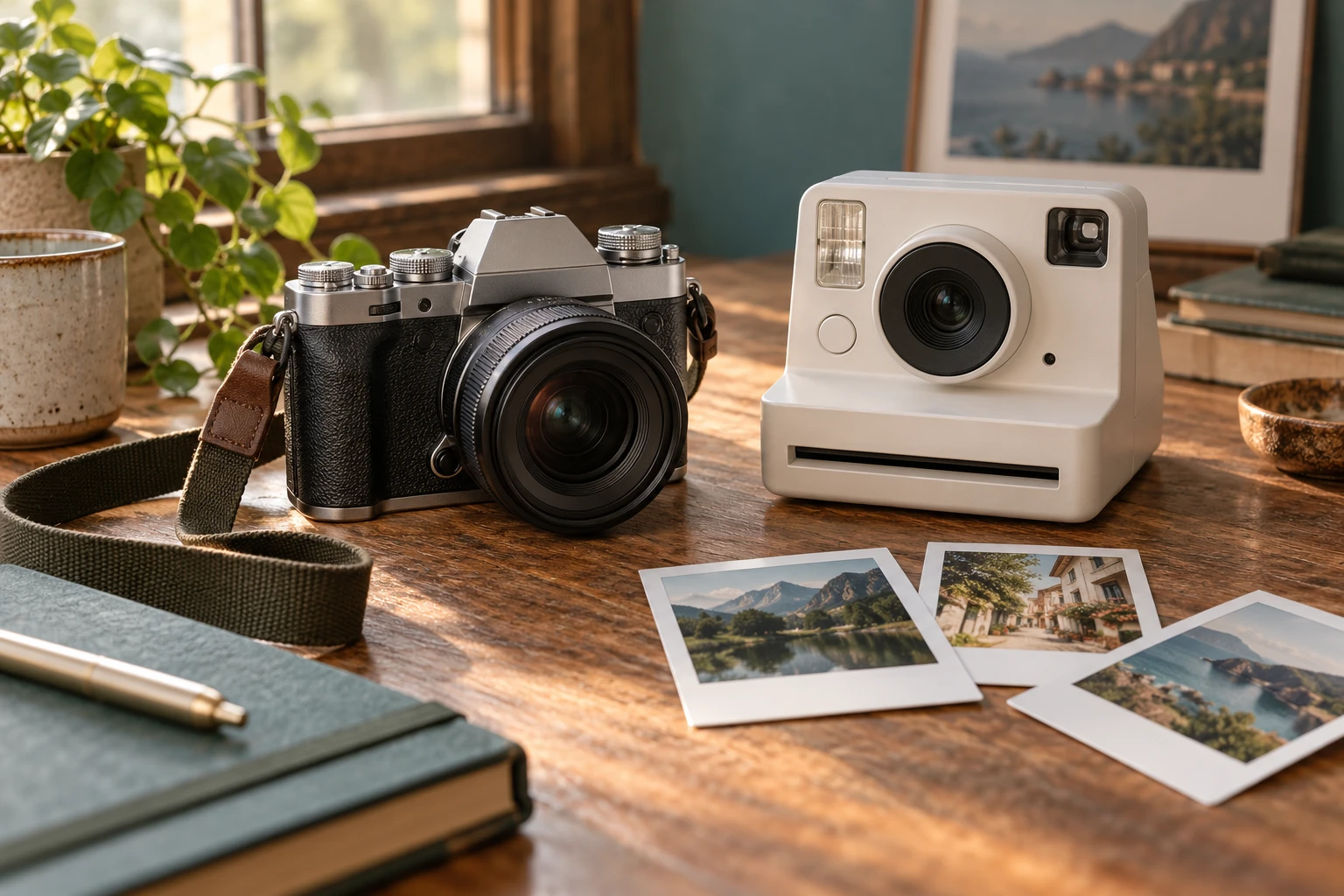
Fujifilm vs. Polaroid: Which Camera Experience Fits You?
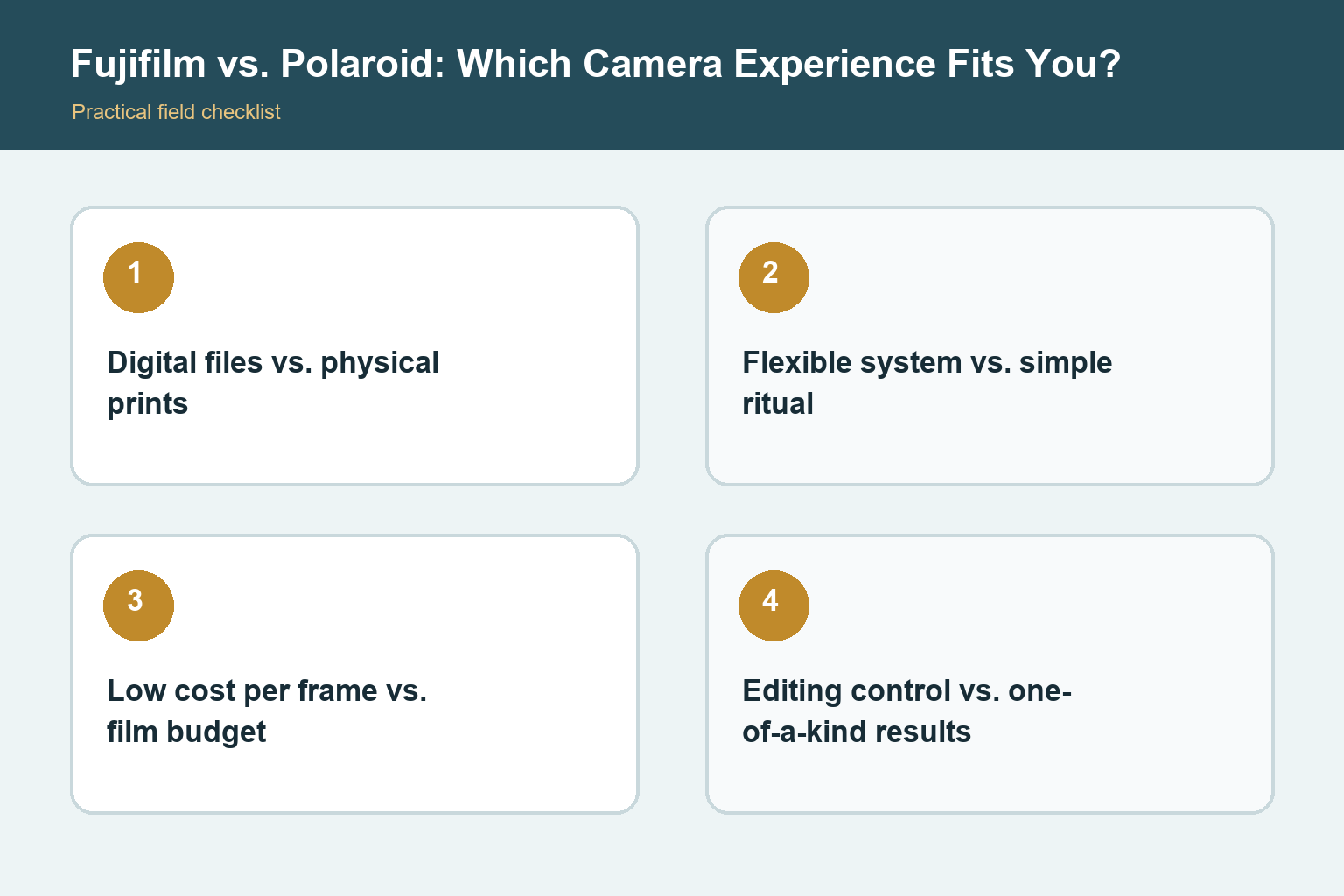
Choose Fujifilm when you want reusable digital files, interchangeable-lens flexibility, and editing control. Choose Polaroid when the physical print and the shared moment are the point.
They solve different creative problems
Fujifilm and Polaroid are often compared because both brands make photography feel tactile and deliberate, but the products do very different jobs. Fujifilm X-series cameras are digital tools built around reusable memory cards, a broad lens system, electronic viewfinders or screens, and files that can be edited and shared. Current Polaroid cameras expose self-developing film and produce a physical object immediately. The useful question is therefore not which brand has better image quality in the abstract. It is whether you want a flexible digital system or a simple camera that turns each press into a small keepsake.
Image quality and control
A modern Fujifilm camera normally gives much more resolution, dynamic range, high-ISO flexibility, focusing precision, and control over exposure. RAW files preserve room for editing, while JPEG film simulations can deliver finished-looking color directly from the camera. Polaroid film is softer, less predictable, and sensitive to light, temperature, distance, and age. Those limits are part of its appeal. A Polaroid print is not a miniature digital file; it has its own color, texture, border, development time, and occasional flaws. Choose repeatability for assignments and important events, or unpredictability for play and tangible memories.
Cost changes with every photograph
A Fujifilm kit costs more at the beginning, particularly after adding a lens, card, spare battery, and storage. Once the kit is owned, each additional frame costs almost nothing until storage, printing, or equipment replacement is considered. A Polaroid camera can be simpler to buy, but every exposure consumes film. Calculate the delivered price of a film pack divided by its frame count and include a realistic allowance for tests and missed pictures. If someone hesitates to press the shutter because film feels expensive, the camera may be used less than expected.
Portability is not only camera size
Small Polaroid models are easy to understand, yet the photographer must also carry film and protect undeveloped and finished prints. Full-size instant cameras can be bulky even without accessories. Fujifilm bodies range from pocketable fixed-lens designs to larger interchangeable-lens kits; the selected lens determines much of the total weight. Compare complete carry setups, including charger, extra film or battery, case, and the way finished pictures will travel. A compact camera paired with a large zoom may occupy more space than a simple instant kit.
Focusing and exposure expectations
Fujifilm cameras typically preview exposure and focus, offer face or subject detection, and let you review a photograph immediately. Polaroid cameras provide fewer corrections after the shutter is pressed. Pay attention to the stated focus range, flash range, and exposure warnings. Keep the subject within the useful distance, avoid harsh backlight until you understand compensation, and shield the developing print as the instructions specify. Do not shake, bend, squeeze, peel, or heat the print; development is a chemical process that needs time.
Sharing and archiving
Digital files are easy to duplicate, back up, edit, print in several sizes, and share privately. That convenience creates its own work: cards must be copied, files organized, and important photographs stored in more than one place. Instant prints need physical protection from heat, moisture, bending, and prolonged harsh light. They are harder to duplicate but delightful to hand to someone. A practical hybrid routine is to make digital photographs for coverage and use instant film for a few intentional portraits or mementos.
Who should choose each system
Fujifilm is the stronger fit for travel coverage, family action, learning exposure, serious editing, video, large prints, or building a lens collection. Polaroid is compelling for parties, guest books, visual journals, gifts, and photographers who enjoy slowing down. Beginners can learn with either, but they learn different lessons: digital encourages rapid testing and review, while instant film encourages anticipation and acceptance. Neither experience is automatically more authentic. The camera that supports the kind of pictures you actually want to make is the better choice.
How to make the advice useful
Begin with a real shooting problem instead of a specification. Write down the subject, typical light, needed working distance, carrying limit, and the result you want to improve. Then test one change at a time. This keeps technique, equipment, and expectations separate. Review photographs on a larger screen, compare them at the same output size, and keep notes about the setting or position that actually changed the result.
A practical test routine
Use familiar subjects before an important trip or assignment. Make photographs indoors, outdoors, in motion, and at the closest distance relevant to the task. Check focus, exposure, background, handling, and file transfer while any return period remains open. Repeat weak results before blaming the equipment. Motion blur, missed focus, poor light, dirty optics, and an unsuitable viewpoint can look similar until the variables are tested carefully.
Keep the workflow dependable
Charge and label batteries, use reputable memory cards, format cards in the camera only after files are safely copied, and keep firmware and manuals associated with the exact model. Back up important files to at least two places. Add one accessory or setting change at a time so unexpected behavior has an identifiable cause. A simple routine that you understand will produce more reliable photographs than a complicated setup copied from someone else. Before travel, repeat the complete routine from capture through backup with the exact cables, cards, applications, and storage you plan to carry. A five-minute rehearsal can reveal a missing adapter or unsupported file before it matters.
Check the result, not only the settings
After each practice session, select a small group of successful and unsuccessful frames. Compare focus at the intended viewing size, inspect highlights and shadows, and ask whether the composition communicates the subject clearly. Keep one example of each common mistake with a short note about its cause. That simple record turns trial and error into a repeatable lesson and prevents changing several controls when only one adjustment is needed. Revisit the exercise in different light before deciding that the camera or lens has reached a hard limit.
Final perspective
Photography improves when the tool, technique, and subject support one another. Treat specifications as clues rather than promises, and judge the result at the size people will actually view it. Comfort and confidence affect whether the camera leaves the bag. Whatever option you choose, practice in ordinary conditions, review mistakes without rushing, and build a small repeatable process before adding more equipment or complexity. Save a final checklist with the camera so a successful setup can be rebuilt months later. Good documentation is especially useful when several people share the equipment or when a rarely used feature must work under time pressure.
Sources and review notes
Editorial note: This educational guide intentionally contains no affiliate product links.