
Reviewed and updated: November 12, 2026
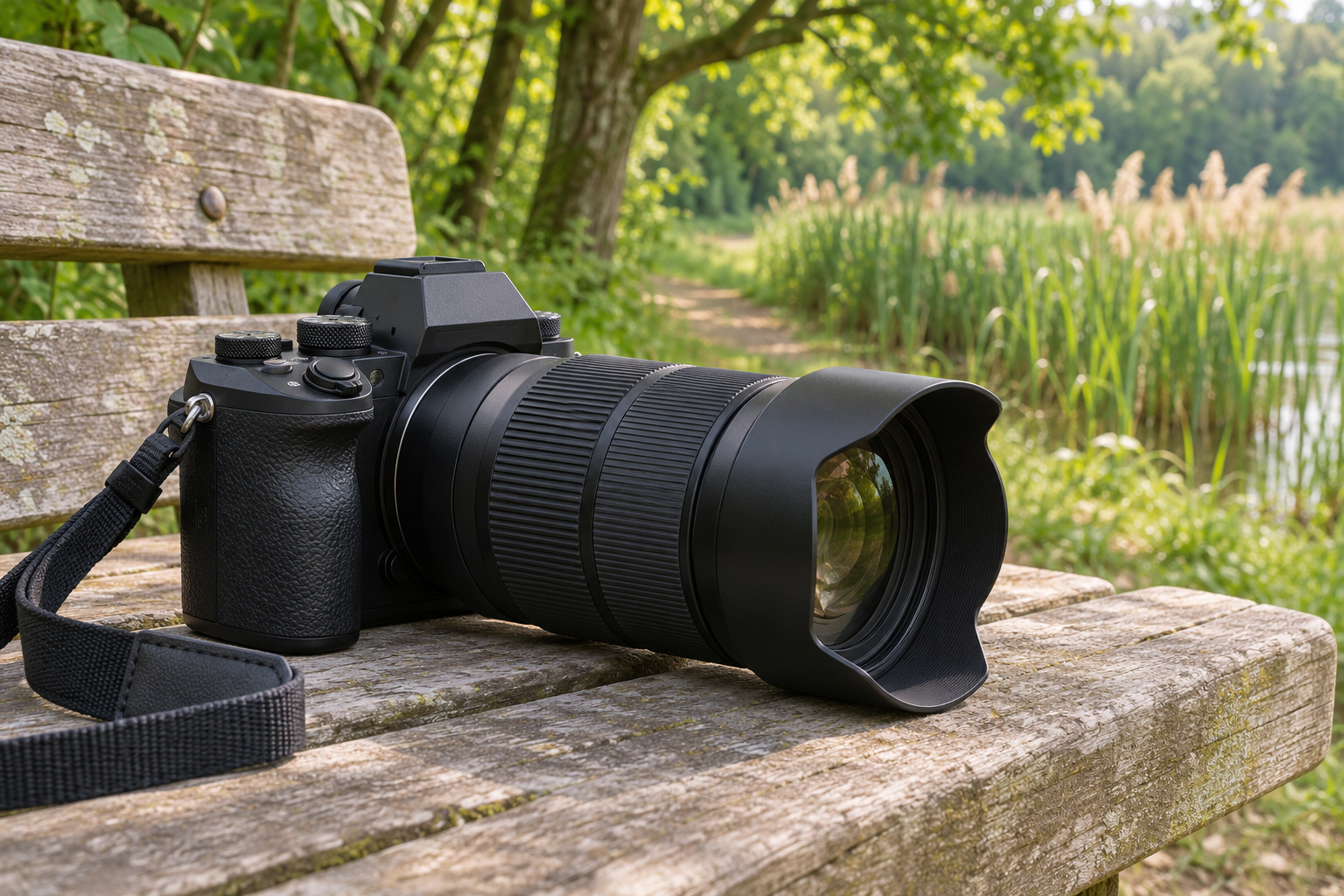
Long walks are easier to enjoy when your telephoto lens earns its place without dominating the bag. Canon’s RF100-400mm F5.6-8 IS USM is an appealing match for daylight wildlife, distant details and outdoor sport on an EOS R camera. We recommend it when you want a flexible long zoom that remains manageable to carry. Its main compromise is the modest maximum aperture, especially f/8 at 400mm: this is a more convincing purchase for bright afternoons than dim sports halls.
The attraction goes beyond reaching a distant bird. You can change framing as the subject moves, photograph small details surprisingly closely and keep optical stabilisation in the lens. A larger, brighter telephoto still has a purpose, but you do not need to make that commitment simply to enjoy photographing nature on a walk.
Reach you are more likely to bring along
The lens weighs approximately 635g and measures about 165mm long before you extend the zoom. Those figures make the appeal concrete: this is a long-range lens you can reasonably consider alongside a smaller everyday lens, rather than automatically planning a separate outing around heavy equipment. Add your camera’s weight when deciding whether the complete setup suits your walk.
Its 100-400mm range gives you room to respond. Start wider for an animal in its surroundings, then tighten the composition for a more isolated view. Compared with a fixed long lens, that flexibility matters when a subject comes toward you or changes direction. You are buying several framing options in one lens, rather than relying on stepping backward at precisely the wrong moment.
Canon RF100-400mm F5.6-8 IS USM
Our daylight nature-walk pick when you want a manageable long zoom for an EOS R camera.
Find in Amazon (paid link)
A useful specialist alongside your everyday zoom
The 100mm starting point is already fairly tight. This would not be our only lens for a family holiday that includes interiors, group photographs and broad scenery. It makes more sense as a companion to the lens you already use for those subjects, adding distant details that your everyday zoom cannot frame as closely.
Think about your usual position as well as your subject. Photographing outdoor sport from the sidelines gives you different opportunities from watching through a distant fence. A zoom can change the framing, but it cannot remove an obstruction or guarantee that every venue lets you stand somewhere useful.
The aperture sets the right expectations
The maximum aperture changes from f/5.6 to f/8 as you zoom toward 400mm. In good daylight, that can be a sensible exchange for the smaller lens you carry. Under trees, near dusk or inside a sports hall, less light reaches the camera than with a brighter telephoto at the same focal length. You may need a higher ISO to keep a shutter speed that suits a moving subject.
That tradeoff deserves more attention than a claim that one lens is universally better. For wildlife walks that usually happen in daylight, the compact size may matter more to you than a brighter aperture. For fast indoor action or regular evening assignments, we would look toward a faster-aperture option. Buying extra reach will not solve a shortage of light.
Stabilisation helps your hands, not a moving subject
Canon rates the optical stabiliser for up to 5.5 stops of shake correction under its stated test conditions, with up to six stops of coordinated correction on compatible cameras with in-body stabilisation. Treat those as manufacturer ratings, not a promise that every handheld photograph will be sharp. Your stance, shutter speed and subject still affect the result.
The distinction is particularly useful when choosing a nature lens. Stabilisation can help when you photograph a resting bird or a distant landscape detail, but it cannot freeze wings or a running animal. The f/8 aperture remains part of the exposure decision even with stabilisation switched on. A support may ease a long wait, though it does not turn this into a brighter lens either.
Controls that leave room to grow
Nano USM provides the autofocus drive, and a separate control ring lets you assign a camera setting through supported custom controls. Having an adjustment at your left hand can be convenient when you want to keep looking through the viewfinder. You can also use the electronic manual-focus ring when you need more deliberate control.
Camera compatibility and autofocus settings remain important for moving subjects. A focus motor alone does not determine how well your particular body follows an animal across a cluttered background. We would choose the lens for its range, carrying weight and light requirements, then check how its controls fit your camera rather than treating a motor name as a guarantee of action results.
Close details add to its everyday appeal
At 400mm, maximum magnification reaches 0.41x. That gives the lens another role when your walk turns up flowers, leaves or small objects, although it is not a life-size macro lens. You can keep some distance from the subject while making it prominent in the frame, which adds variety beyond distant wildlife.
The closest focus distance changes with zoom position: approximately 1.2m at 100mm, 0.88m at 200mm and 1.05m at 400mm, measured from the camera’s image plane. The shortest distance and highest magnification therefore happen at different settings. This matters if close details are a major reason for your purchase; the single shortest-distance figure does not describe the whole zoom range.
Build the package around the lens first
The RF100-400mm is for Canon’s RF-mount EOS R system. It is not an EF telephoto for a Canon DSLR. The exact RF100-400mm F5.6-8 IS USM name distinguishes this lens from older EF telephotos with similar focal lengths. The lens uses 67mm filters, while its ET-74B hood is an optional accessory sold separately.
Canon specifies no dust- or weather-resistant construction. A dry-day plan or suitable cover makes more sense than assuming the camera’s own sealing protects the lens too. Our camera rain-cover guide can help you consider protection for the combined body and extended lens.
Optional RF1.4x and RF2x extenders are compatible, but they also reduce the maximum aperture. We would start with the bare zoom before adding one: learn whether 400mm meets your needs and whether you usually have enough light. Extenders are a later choice, rather than an essential part of making this lens useful.
Our verdict
The RF100-400mm earns our recommendation as a daylight companion for an EOS R kit you want to keep enjoyable to carry. Its zoom flexibility, optical stabilisation and close-detail capability give it several useful roles on a nature walk. Keep the f/8 long end and lack of weather sealing in mind, and favour a brighter alternative for dim action. Match the RF100-400mm F5.6-8 IS USM model name and included accessories to your planned kit.