
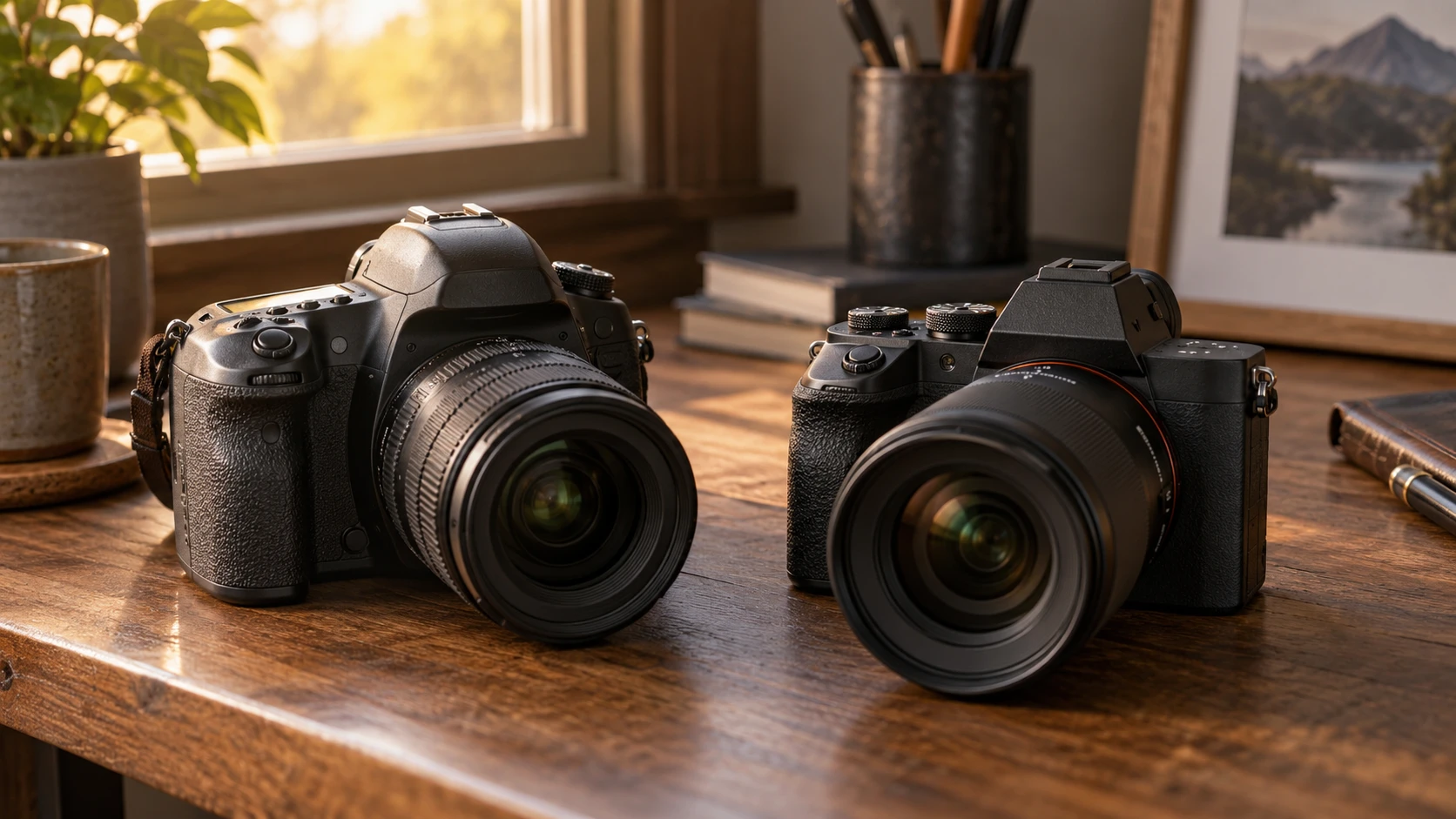
Nikon D7100 Review: Worth Buying Used in 2026?
What this guide covers in 2026
Introduced in 2013, the D7100 combines a 24-megapixel DX sensor, optical viewfinder, body focus motor, two SD slots, and extensive physical controls. It can make detailed files, but live-view autofocus, video, wireless transfer, subject detection, screen movement, and service prospects trail current mirrorless cameras.
Used Nikon D7100 Body
A clean D7100 can be a strong learning or backup camera for stills. Check shutter count, sensor condition, card slots, autofocus consistency, command dials, rubber grips, battery chamber, ports, and signs of moisture or impact. Price it as an aging body, not as a collectible.
Nikon Z50II Body
The current DX mirrorless alternative adds modern subject-detection autofocus, a fully articulating screen, stronger video tools, and access to native Z lenses. It is the better long-term starting point for most new buyers, though adapting existing F-mount glass can affect balance.
Nikon Z5II Body
The Z5II provides a current full-frame path with in-body stabilization, improved low-light autofocus, and the Z lens system. Total system cost is higher because DX lenses are not ideal on full frame. Compare lenses, batteries, cards, and storage before switching.
Nikon Mount Adapter FTZ II
FTZ II lets many F-mount lenses work on Z bodies without optical correction. AF-S and AF-P lenses generally retain more automation than screw-drive AF lenses. Confirm the exact lens compatibility because an adapter does not guarantee every legacy function.
Choose for the photographs you actually make
Start with subject, working distance, light, and the output you need. A broad zoom is convenient, a bright prime helps shutter speed and depth of field, and a telephoto creates reach at the cost of size. Write down the situations that cause the current kit to fail before buying. That list prevents a famous specification from replacing the practical need that motivated the purchase.
Compatibility comes before image quality
Confirm the complete model name, Nikon Z or F mount, FX or DX coverage, card type, and any adapter requirement. Similar Nikon names can refer to different generations. Z and F mounts are not interchangeable. FTZ II can preserve many electronic functions with compatible F-mount lenses on Z bodies, but support varies and the adapter does not turn an older design into a native Z lens.
How to judge a used listing
Prefer a seller with clear photographs, an accurate condition description, and a useful return period. Ask about haze, fungus, separation, scratches, impact, moisture, autofocus, stabilization, aperture operation, battery health, card slots, and included accessories as applicable. Cosmetic wear is often harmless; optical haze, damaged mounts, intermittent electronics, or severe impact are reasons to walk away.
Test during the return window
Photograph detailed scenes at several distances and apertures. Compare both sides of the frame, test focus repeatedly, and review files at the size you actually use. Exercise stabilization, switches, zoom and focus rings, card writing, video recording, or adapter communication as relevant. A controlled test is more useful than judging one attractive sample image.
Budget for the complete system
Include lenses, filters, hood, adapter, cards, batteries, support, storage, reader, and a protective bag. Large high-resolution files may require more computer and backup capacity. Heavy glass can make a small camera unpleasant to carry. A slightly less ambitious option that travels regularly is often the more productive purchase.
Current products versus legacy value
Older Nikon equipment can still make excellent photographs when condition, price, and limitations are understood. Current Z products usually provide a clearer service path, newer autofocus, and native communication. Legacy F-mount gear makes sense when it solves a specific need at a meaningful discount or complements equipment already owned.
Handling and technique affect the result
Equipment cannot replace stable technique, accurate focus, suitable shutter speed, and useful light. Practice with the controls before an important session. Use support when shutter speed becomes marginal, review critical focus at useful magnification, and learn how the equipment behaves at its weakest settings. Wide apertures reduce depth of field, long lenses magnify movement, and broad zoom ranges involve compromises. Knowing those limits produces more consistent photographs than changing equipment after every disappointing frame.
When a system upgrade is the better answer
Adding another legacy item is sensible when the existing camera remains reliable and the purchase fills a clear gap. A system change becomes more attractive when several needs arrive together: better subject detection, dependable live-view autofocus, quieter operation, modern video, stabilization, lighter lenses, current service, or simpler transfer. Compare the complete cost. Many AF-S and AF-P lenses adapt through FTZ II, while DX lenses use a cropped image area on full-frame Z bodies.
Care, storage, and long-term reliability
Keep equipment dry, capped, and protected from rapid temperature changes. After dust, salt spray, or damp weather, clean the exterior with suitable tools and let the kit dry before storage. Inspect rechargeable batteries for swelling and replace cards after unexplained errors. Exercise stored lenses periodically. Keep serial numbers and condition photographs for valuable equipment. Careful storage cannot reverse existing fungus or separation, but it reduces future damage.
Amazon links and availability
The buttons below open tagged Amazon searches instead of promising that one seller or configuration will remain available. Verify the exact model, mount, capacity, condition, seller, warranty region, return terms, and included accessories. Discontinued equipment may appear as used, renewed, old stock, or third-party bundles. Prices are omitted because they can change quickly.
Product searches
Check current Amazon listings (paid link)
Check current Amazon listings (paid link)
Check current Amazon listings (paid link)
Check current Amazon listings (paid link)
Sources and review notes
- Official Nikon source
- Official Nikon source
Affiliate disclosure: Digital Camera HQ may earn from qualifying purchases through eligible links. Product selection and editorial conclusions are independent.
Final buying check
Before ordering, confirm the precise model name and compatibility with the camera you own. Inspect condition, seller history, warranty, and return period, then test the equipment promptly. Keep packaging until focus, stabilization, controls, card writing, and file quality have been verified in real situations. The best choice is the one that reliably solves the repeated photographic problem without creating an unnecessarily expensive or awkward system.