
Best DSLR and Mirrorless Camera Microphones in 2026
What matters in 2026
An on-camera microphone improves clarity only when it is compatible, set correctly, protected from wind, and close enough to the subject. For interviews, moving the microphone closer usually matters more than buying a more expensive model. This refresh preserves the original page address and publication history while replacing outdated advice with a current, testable workflow.
Begin with the photograph, recording, or maintenance result you need. Separate technique from equipment, confirm the exact system and support requirements, and use a repeatable test before changing several variables or buying more gear. The sections below explain the topic in practical order and keep recommendations tied to observable results.
Check the camera input and monitoring path
Confirm whether the camera has a 3.5mm microphone input, digital shoe, USB audio support, plug-in power, and a headphone output. TRS and TRRS connectors are not interchangeable without the correct cable. Set manual input low enough to avoid clipping, use the microphone’s stronger clean output when available, and record a short test while listening on headphones.
Choose pickup pattern for the placement
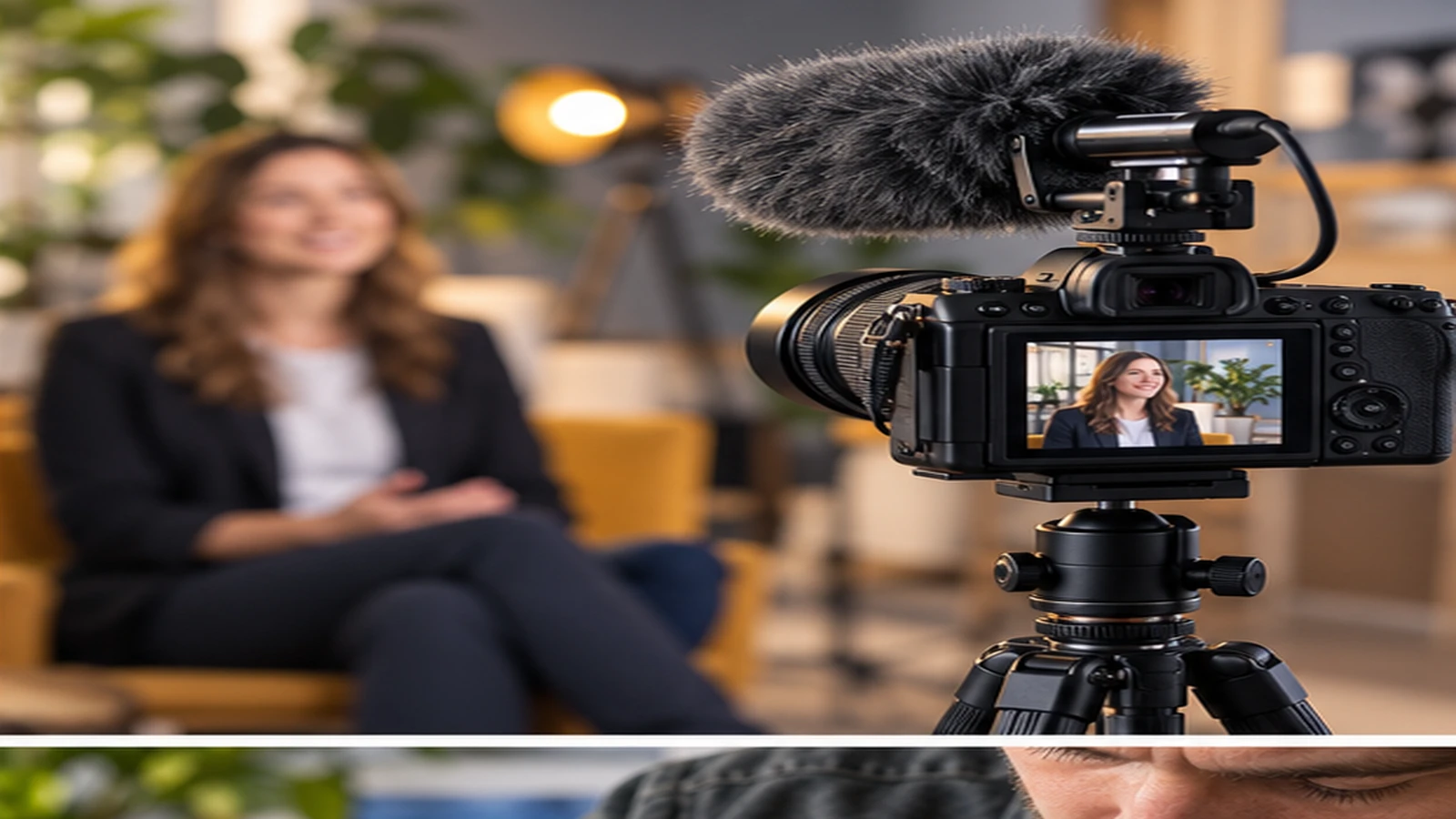
A compact shotgun on the camera is convenient for vlogging and nearby subjects but still records room reflections and distant noise. A lavalier or wireless system puts the microphone closer to speech. Stereo microphones suit ambience and music when directionality is less important. Use proper shock mounting and wind protection, and keep the microphone outside the frame and away from autofocus motors.
Record a backup and manage power
A safety channel at a lower level can protect sudden peaks. Dual-system recorders provide flexibility but require syncing and disciplined file handling. Check battery state, auto-power behavior, cable strain, and whether the camera records clean audio for the entire clip. Slate or clap when synchronization matters, and monitor the recording rather than assuming moving meters guarantee usable sound.
RØDE VideoMic NTG
RØDE VideoMic NTG is a current or currently supported option relevant to this guide. Confirm the exact version, mount, connector, power method, and included accessories before ordering. Judge it by the repeated photographic job rather than one headline specification. Compare handling, carried size, focus or pickup behavior, stabilization where applicable, file support, warranty region, seller, and return terms. Availability and bundles change, so match the complete product name and use the official source as the compatibility reference.
Sennheiser MKE 400
Sennheiser MKE 400 is a current or currently supported option relevant to this guide. Confirm the exact version, mount, connector, power method, and included accessories before ordering. Judge it by the repeated photographic job rather than one headline specification. Compare handling, carried size, focus or pickup behavior, stabilization where applicable, file support, warranty region, seller, and return terms. Availability and bundles change, so match the complete product name and use the official source as the compatibility reference.
RØDE VideoMic GO II
RØDE VideoMic GO II is a current or currently supported option relevant to this guide. Confirm the exact version, mount, connector, power method, and included accessories before ordering. Judge it by the repeated photographic job rather than one headline specification. Compare handling, carried size, focus or pickup behavior, stabilization where applicable, file support, warranty region, seller, and return terms. Availability and bundles change, so match the complete product name and use the official source as the compatibility reference.
Deity V-Mic D4 Mini
Deity V-Mic D4 Mini is a current or currently supported option relevant to this guide. Confirm the exact version, mount, connector, power method, and included accessories before ordering. Judge it by the repeated photographic job rather than one headline specification. Compare handling, carried size, focus or pickup behavior, stabilization where applicable, file support, warranty region, seller, and return terms. Availability and bundles change, so match the complete product name and use the official source as the compatibility reference.
Define the result before choosing settings
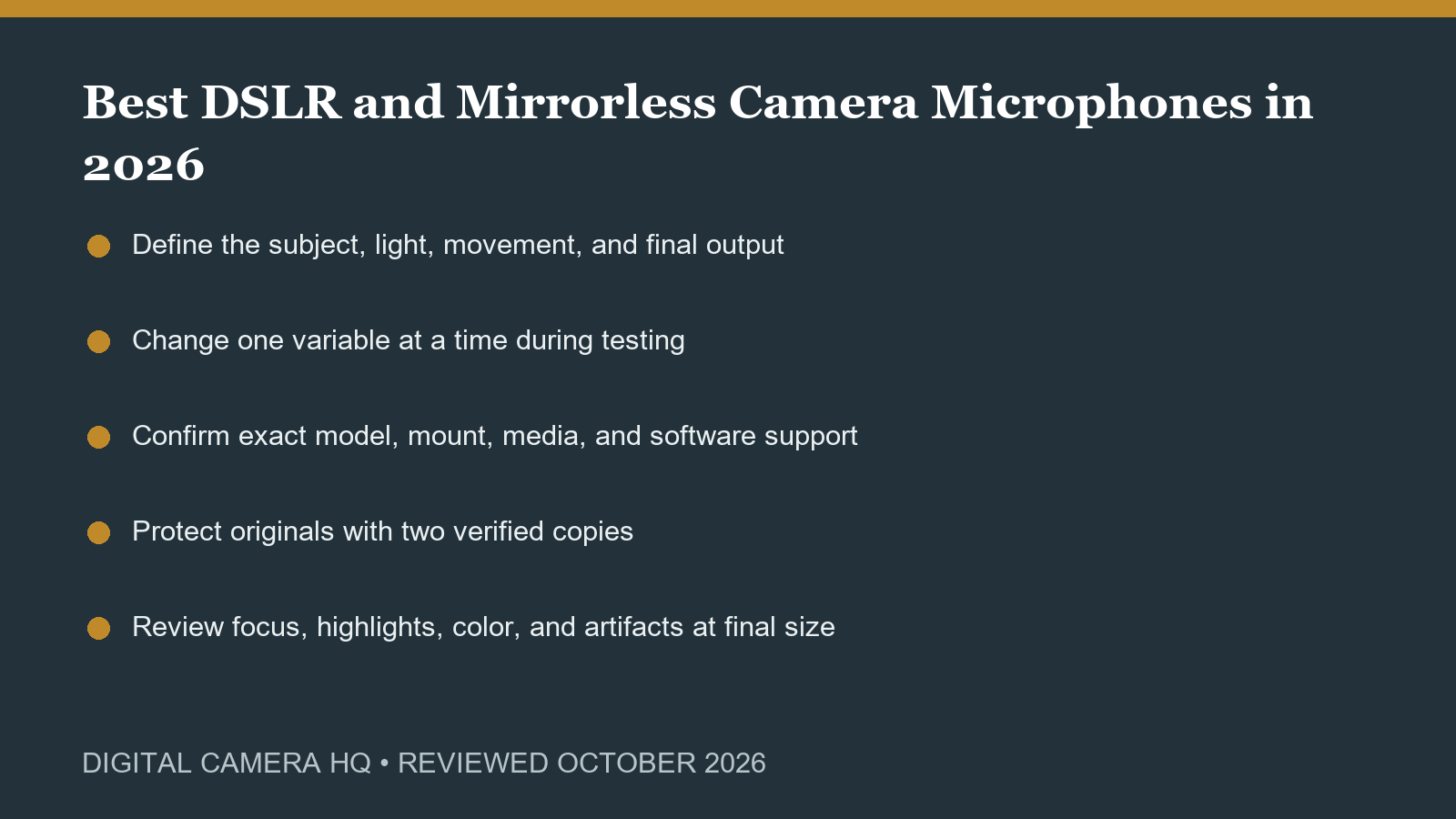
Write down the subject, light, distance, motion, final output, and the failure you want to prevent. This turns a broad topic into a repeatable decision. Test with the equipment already owned before assuming a purchase is required. A controlled comparison should change one variable at a time, use the same scene, and judge the delivered photograph or video rather than an isolated specification.
Keep exposure, focus, and stability separate
A soft or noisy image can come from camera shake, subject movement, missed focus, insufficient light, aggressive cropping, or processing. Diagnose each cause independently. Use a support when the subject allows it, choose enough shutter speed for movement, focus on the intended plane, and expose without sacrificing important highlights. Review several frames because one lucky result is not a dependable workflow.
Check compatibility and current support
Confirm the exact camera, lens mount, format, battery, card, cable, application, computer, and firmware. Similar product names can hide different generations or regional versions. Read the official manual and support notes before changing firmware or buying an accessory. A feature that depends on an unsupported phone app, unavailable battery, or incompatible editor may be less useful than a simpler supported option.
Protect the files from capture to delivery
Use reliable cards, copy photographs to two separate locations, verify the copies, and only then format the card in the camera. Preserve originals and make edits nondestructively. Keep dates and metadata intact, export for the final destination, and restore a sample from backup periodically. The best capture has little value if it cannot be found, opened, or recovered later.
Test under realistic conditions
A short home test should include startup, controls, focus, stabilization, burst or recording, battery, heat, card writing, transfer, editing, and export. Inspect important frames at full size, then judge them again at final output size. For used or newly purchased equipment, complete this process while the return period is open and keep packaging until the system has passed the test.
Make the process repeatable
Record the settings, equipment, light, subject distance, and result from the successful test. A brief checklist prevents the same problem from returning and makes future comparisons fair. Revisit the process after a firmware, software, lens, microphone, card, or computer change. Keep a known-good baseline so a new problem can be isolated quickly rather than blamed on every part of the system.
Amazon links and availability
These tagged searches help locate the exact model while allowing for changing stock. Search results may mix generations, mounts, used items, imports, and bundles. Match the complete product name, official compatibility, seller, warranty region, included accessories, and return terms before ordering. Prices are omitted because they change frequently.
Check current Amazon listings (paid link)
Check current Amazon listings (paid link)
Check current Amazon listings (paid link)
Check current Amazon listings (paid link)
Affiliate disclosure: Digital Camera HQ may earn from qualifying purchases through eligible links. Product selection and editorial conclusions remain independent.
Official sources and review notes
- RØDE VideoMic NTG
- Sennheiser MKE 400
- RØDE VideoMic comparison
Official manufacturer, developer, or support material was reviewed during the October 2026 refresh. Product availability and software features can change, so confirm the exact model and current support page before purchase or a critical assignment.
Final recommendation
Use the simplest process that produces a dependable final image or recording. Confirm compatibility, test in realistic conditions, protect the original files, and change one variable at a time. Buy only when a current product solves a repeated limitation that technique, maintenance, or equipment already owned cannot solve. That approach keeps the kit smaller, the workflow clearer, and the result easier to reproduce.