
Reviewed and updated: November 6, 2026
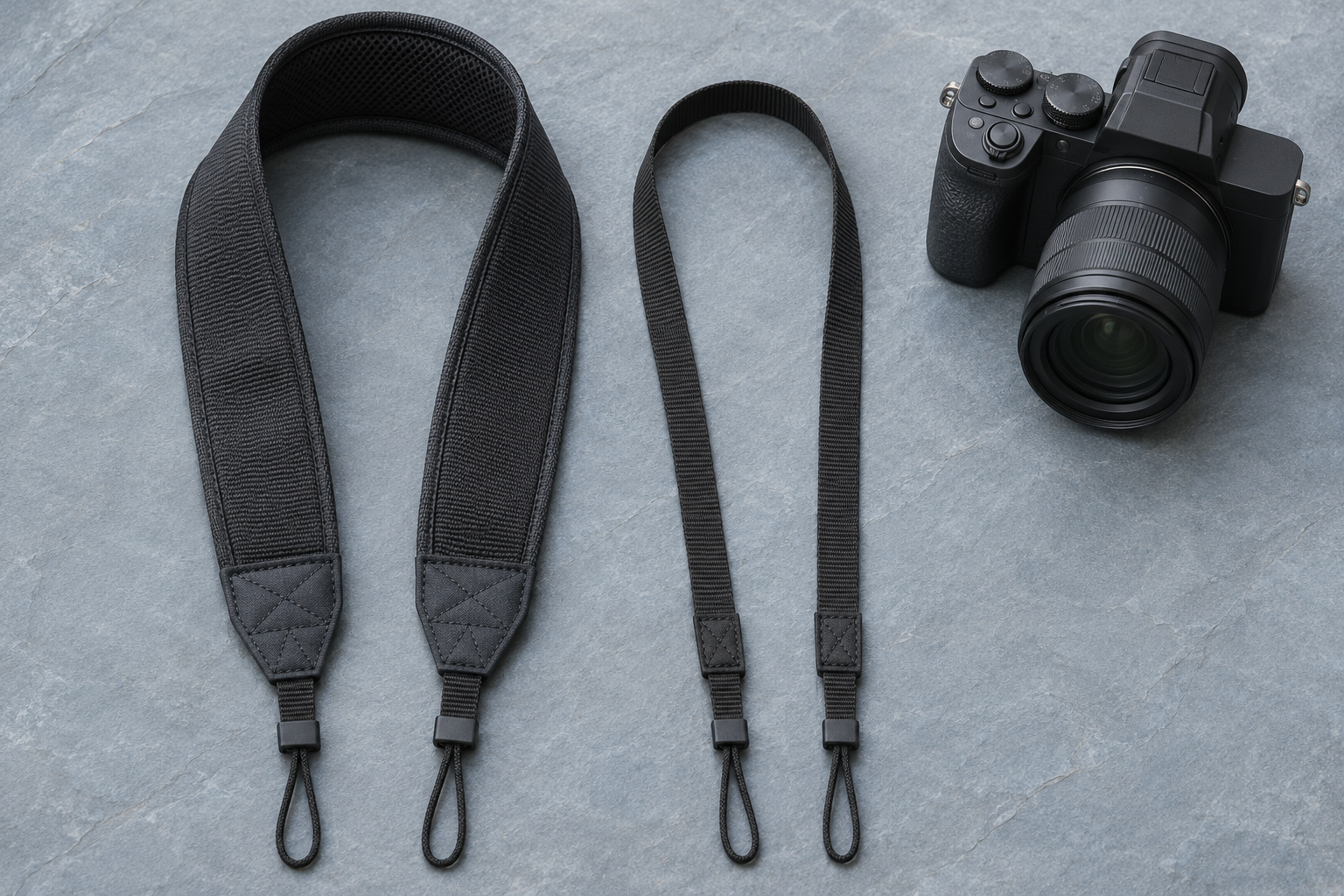
Peak Design Slide and Slide Lite share a carrying system, but their different widths change the buying decision. Slide is the wider option for photographers who want more strap across a shoulder. Slide Lite pares that width down for a smaller kit and less material in a bag. Neither name tells you how comfortable it will feel with your particular camera and clothing.
Choose Slide as the first candidate for a heavier everyday setup or when a narrow strap concentrates pressure. Start with Slide Lite for a compact mirrorless camera and modest lens when packability matters. Skip both if your existing strap is comfortable and quick disconnection would not solve a real problem. This comparison uses current manufacturer specifications and practical buying analysis, not hands-on testing.
Peak Design Slide Camera Strap — the wider starting point
Peak Design specifies a 4.5 cm width, 148 g weight and adjustable length from 99 to 145 cm. Its Anchor Link system supports sling, neck and shoulder configurations. Choose it when a broader carrying surface matters more than minimizing strap bulk; skip it if a compact camera and small bag make that extra material inconvenient.
The Amazon search below targets the standard black Slide camera strap, rather than spare anchors or another strap in the range. Confirm the model and package contents in the result you select.
Check this model on Amazon: Peak Design Slide Camera Strap (paid link)
Peak Design Slide Lite Camera Strap — less width to pack
Slide Lite has a manufacturer-specified width of 3.2 cm, weight of 104 g and the same 99–145 cm length range. Peak Design positions it for mirrorless and light DSLR cameras. Choose it for a smaller daily kit; skip it when your main complaint is pressure from narrow webbing with a heavy camera.
This Amazon search targets the standard black Slide Lite camera strap. Check that the result is the complete strap, not a similarly named accessory or alternative model.
Check this model on Amazon: Peak Design Slide Lite Camera Strap (paid link)
The useful difference is width, not camera format
Slide is 1.3 cm wider than Slide Lite. That gives it more material across the carrying area, although comfort still depends on how the webbing lies, where the adjusters sit and how you wear it. A wider strap can be a sensible candidate for spreading a load; it is not a promise that every shoulder will prefer it.
A mirrorless label is not a reliable shortcut. A mirrorless body with a large zoom may be more demanding to carry than a DSLR with a small prime. Compare the assembled kit you actually use, including grip, hood and other attached equipment. Choose around that combination rather than buying the Lite simply because the camera lacks a mirror.
Where Slide earns its extra material
Consider Slide when the camera spends long stretches hanging between photographs. A broader carrying surface is relevant if your current thin strap feels concentrated against your shoulder. It is also worth considering when you frequently carry a substantial body-and-lens combination, provided the camera and lens manufacturers approve the attachment arrangement.
The tradeoff appears when packing or working around other straps. Wider webbing takes more space and can overlap a backpack harness or jacket collar differently. If you repeatedly remove the camera to fit it into a tight compartment, check where you would store the detached strap. Buying more strap than the routine needs can create another object to manage.
Where Slide Lite is the better starting point
Slide Lite makes a stronger case for a compact camera carried on short walks or while moving between bag and shooting position. Its narrower webbing and lower specified weight reduce the amount of strap to accommodate. That difference is useful when you value a small kit, rather than a reason to expect better photographs or faster handling automatically.
Do not confuse lower strap weight with reduced camera weight. The same equipment still rests against your body. If a narrow strap already bothers you, the smaller package may be the wrong tradeoff. Conversely, a broad strap can feel excessive around a small camera. Compare the two widths against something familiar before choosing: measure the comfortable strap you already own.
Both have the same stated length range
Peak Design lists a 99 cm minimum and 145 cm maximum for both models. Slide Lite therefore does not solve a short-fit problem simply by being smaller in width. Check the required length for your intended neck, shoulder or crossbody position while wearing the layers you normally use. The camera should remain reachable without pulling hardware into an awkward spot.
Rehearse raising the camera to your eye, using a tilted rear screen and changing to portrait orientation. Then sit down and bend carefully with the equipment supported. An arrangement that works while standing still may put the lens against a chair or thigh. Fit is a reason to assess the actual setup, not an assumption to make from a product photograph.
Check attachment and tripod clearance
The shared Anchor Link approach lets the strap detach from its camera-side anchors and supports different carrying configurations. Decide where those connections would go before ordering. Use only approved attachment points and follow the supplied instructions. Do not force a cord through a sharp or undersized opening, and check that every connector is fully seated before supporting the camera.
If you plan to use a bottom attachment, check battery-door access and compatibility with your tripod plate. A low-profile fitting still occupies space. Keep a hand on the camera while learning any release and inspect cords and hardware regularly. Our camera strap buying guide puts these choices alongside other carrying styles.
Think about the alternative you actually need
Neither strap is a rigid backpack mount, protective case or wrist-only tether. If you mainly hold a compact camera and return it to a bag during breaks, a long strap may be unnecessary. Our Cuff versus Leash comparison explains that different decision. Choose the carrying method first, then its width.
For either Slide, take ordinary packing precautions with the adjusters and other hardware. Keep hard parts from pressing against screens or lens surfaces inside a bag. Maintain the strap according to its care instructions and replace damaged components. A convenient quick connection remains something to operate deliberately, especially near water, stairs or crowded spaces.
Which one should you order?
Buy Slide when the wider 4.5 cm webbing addresses a specific carrying need and you accept its greater bulk. Buy Slide Lite when the 3.2 cm format suits a smaller kit and your priority is keeping the strap manageable. Avoid buying both just because they share connectors; start with the one that fits your normal camera and carrying position.
The buttons open precise Amazon searches, not verified individual listings. Check the complete model name, color, included parts, seller and return terms before ordering. Search results can include replacements and other versions. If your present strap already works, keep it until you can name the problem a replacement would solve. The better purchase is the one that improves your own carrying routine.