
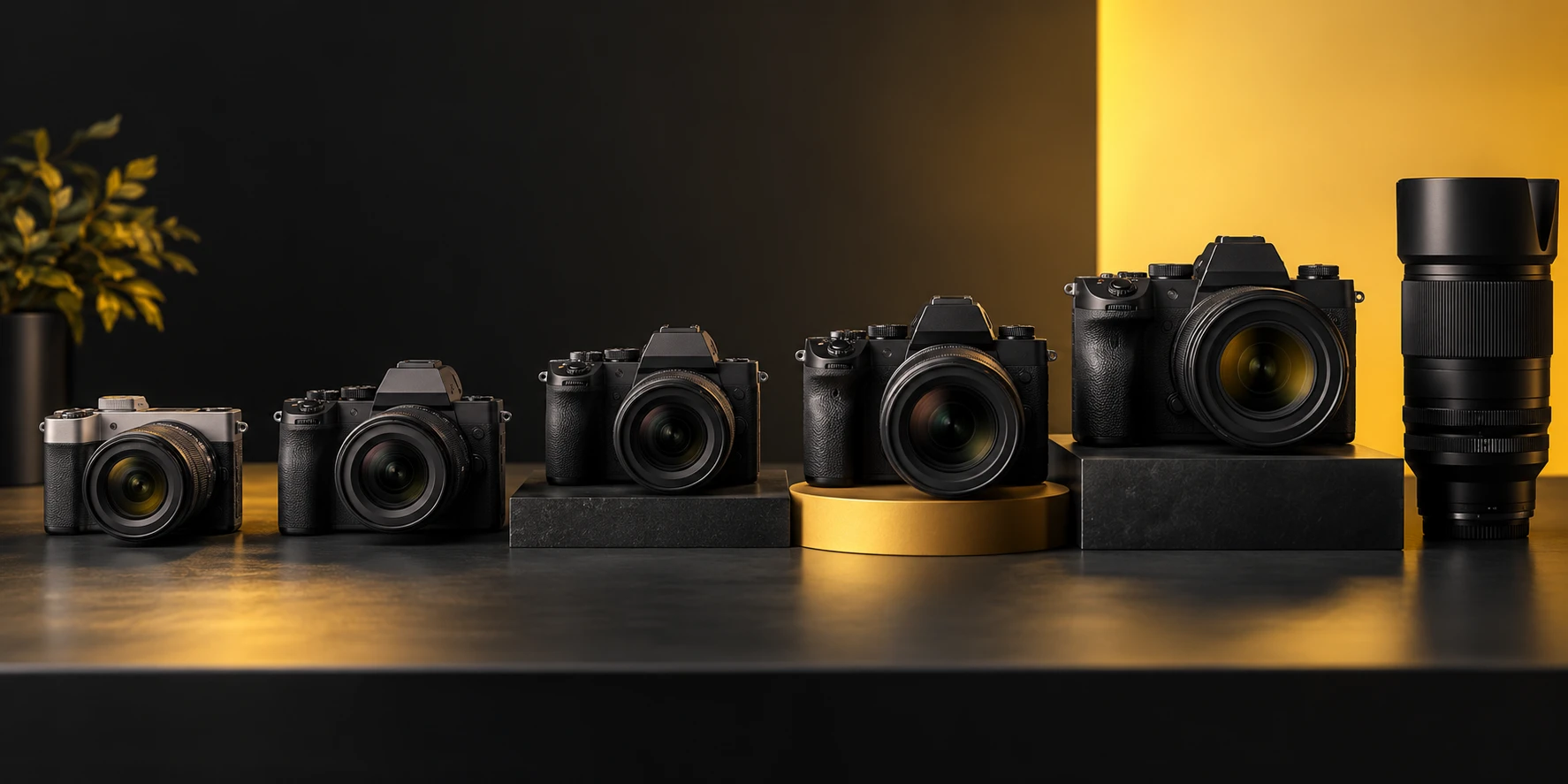
Best Nikon Cameras in 2026: Five Picks by Use
Nikon’s Z system now covers compact DX bodies, accessible full frame, high-speed hybrids, retro controls, and professional cameras. The Z50II is a strong entry point; the Z5II and Z6III serve different full-frame needs; the Zf emphasizes classic operation; and the D7500 remains relevant only for photographers who specifically want an F-mount DSLR. Lens plans should lead the decision.
Our recommended shortlist
A compact 20.9-megapixel DX mirrorless camera with a viewfinder, vari-angle touchscreen, subject detection, and approachable handling.
Check current options on Amazon (paid link)
A balanced full-frame entry with a 24.5-megapixel sensor, in-body stabilization, capable autofocus, and a bright viewfinder.
Check current options on Amazon (paid link)
A faster full-frame hybrid for action, events, wildlife, and demanding video where speed and readout matter.
Check current options on Amazon (paid link)
A 24.5-megapixel full-frame body with traditional dials and modern processing for photographers who enjoy a classic interface.
Check current options on Amazon (paid link)
A current high-performance full-frame body for wildlife, action, events, and professional work that needs flagship-level speed in a smaller body than the Z9.
Check current options on Amazon (paid link)
DX or full frame
DX bodies and lenses can make a lighter, less expensive kit and provide useful apparent reach for wildlife. Full frame generally offers more control over shallow depth of field and stronger high-ISO potential, but lenses often become larger and more costly. Compare complete kits at the focal lengths you need instead of treating sensor size as a quality ranking.
Z50II for portability
The Z50II brings Nikon’s current processing and subject-detection approach to a compact DX body. Its 20.9-megapixel sensor, vari-angle screen, and viewfinder make it suitable for travel, family use, and creators. It lacks in-body stabilization, so stabilization depends on the lens or technique. Check how the small body balances with any long telephoto you intend to use.
Z5II or Z6III
The Z5II is the value-oriented full-frame choice for portraits, travel, landscape, and general photography. The Z6III earns its higher position for speed, faster sensor readout, action, and more demanding hybrid work. A still photographer who rarely shoots fast movement may gain more from a better lens than from choosing the faster body.
Zf for a specific control preference
The Zf combines modern autofocus and stabilization with traditional dials and a flat classic shape. Some photographers love that direct interface; others prefer a deeper grip and mode-based controls. Handle it with the planned lens. An accessory grip may improve comfort, but it adds size and cost to a camera chosen partly for its form.
When the Z8 is justified
The Z8 brings much of Nikon’s flagship speed, autofocus, resolution, and video capability into a body smaller than the Z9. It is the specialist choice for demanding wildlife, action, events, and professional assignments. Its cost, file sizes, controls, and lens requirements are unnecessary for casual use, so most photographers will be better served by a Z5II or Z6III plus stronger lenses.

How we evaluated the options
Our selection process starts with the photographer’s actual use: subject, lighting, carrying tolerance, existing lenses, and willingness to learn controls. We then compare the features that change the result in that use case, rather than counting every menu item. Image quality matters, but autofocus behavior, viewfinder comfort, control layout, battery planning, and lens availability often decide whether a camera remains enjoyable after the first week.
Verify the exact listing
Prices, bundles, firmware, and availability change. Treat the links in this guide as a way to compare current listings, then verify the manufacturer specification page, included accessories, warranty source, seller, and return policy. Marketplace titles can mix generations or mounts. The product box, model number, and mount marking should agree before the return window closes.
Write down the intended use before comparing listings. Include the subject, typical light, longest comfortable carrying time, and the feature that would solve the largest current frustration. This short note makes it easier to ignore attractive specifications that do not improve the photographs you actually want to make.
Plan a first-week test while the return period is open. Photograph a familiar indoor subject, an outdoor scene, a moving person or pet, and the closest subject the equipment is meant to handle. Review the files on a larger screen, repeat any weak result, and separate technique problems from equipment limits.
Keep the setup understandable. Add one accessory or control change at a time, label batteries and chargers, format cards only after files are backed up, and store the manual where it can be found. A dependable routine protects equipment and makes it much easier to notice when a new setting causes an unexpected result.
Final recommendation
Choose the Z50II for a compact DX kit, the Z5II for accessible full frame, the Z6III for speed and hybrid work, and the Zf for classic controls. Choose the Z8 when professional-grade speed and resolution are central requirements. Spend time on the lens roadmap, because bodies change faster than good lenses and the complete kit determines size, capability, and cost.
Affiliate disclosure: As an Amazon Associate, Digital Camera HQ may earn from qualifying purchases. Prices and availability change. Product links use the site tracking tag digitalcamera-hd-20.