
Are you looking for an amazing telephoto lens to shoot the best close-up images?
Well, you’re in luck, because you have landed in the right place!
This article will give you a complete round-up of the best telephoto lenses available, so let’s get started!
Review of the Best Telephoto Lenses
Now that you’ve gone over the basics of a telephoto lens, let’s dive into the reviews of the best ones collected in this article. All the following ones are great products and won’t disappoint.
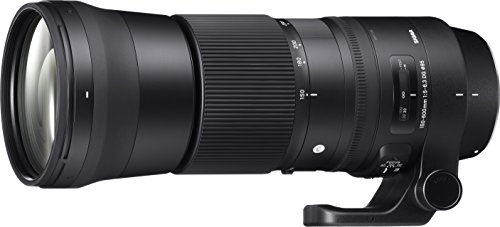
Best Overall and Best Telephoto Lens for Nikon: Sigma 150-600mm 5-6.3 Contemporary DG
PROS
- Auto-focus is very fast and silent
- Produces some very sharp images
- Has an outstanding telephoto reach
- Comes with a zoom locking mechanism to focus better
- Equipped with an image stabilizing feature to eliminate blurriness
CONS
- Noticeable moderate distortion in images
- Images contain some level of chromatic aberration
- Aperture is comparatively narrower than other lenses
What Recent Buyers Report
The images produced with Sigma 150-600mm are tack-sharp with brilliant resolution. Moreover, the auto-focus is blazing fast, and the optical stabilization feature allows you to take crystal-clear images each time. The build is also of high-quality and dependable, which makes this an overall winner for telephoto lenses.
Why it Stands Out to Us
The features that stand out the most are how this lens manages to merge the portability and quality aspects of a lens into one, without compromising on the resolution of the image. It is also equipped with a couple of advanced features that make it promising for any telephoto lens user.
Who Will Use This Most
This lens is an amazing investment for professionals who are interested in wildlife photography. This is because the optical stabilizer allows you to take images of fast-moving subjects at quick shutter speeds without making the images blurry. For birding and motor photography, this is a must-have.
Bottom Line
If you are on the hunt for the best telephoto lens on the market, then this is one that will definitely impress you. With its highly advanced technology and supreme build quality, it is all you need for capturing the sharpest photos of subjects at a distance, especially if you have a Nikon camera.
No products found.
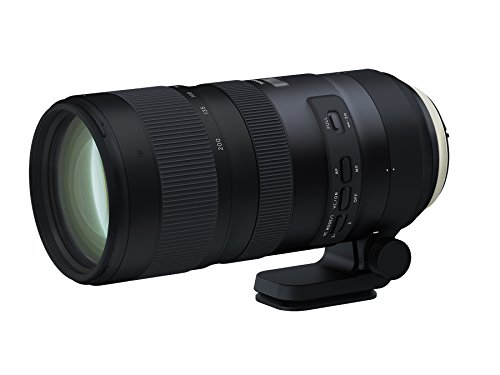
Runner-up: Tamron SP 70-200mm F/2.8 Di VC G2
PROS
- Comes with an integrated tripod collar
- Offers compatibility with teleconverters
- Quality of the build is sturdy and durable
- Equipped with an image stabilization feature to reduce blurriness
- Throughout the range, the image quality is consistent and tack-sharp
CONS
- Flare resistance is weak
- Corners of the images may be dimmed
- Sharpness of the images falter at 200 mm
What Recent Buyers Report
Tamron SP gives you really sharp images, with the most amazing low light performance. It has great focus acquisition as well, and the lens stabilization feature allows you to take crystal-clear images each time. The clarity, resolution, and sharpness are really impressive, and the build is very solid as well.
Why it Stands Out to Us
The highly enhanced optical performance and vibration compensation feature of this lens gives it an edge towards other telephoto lenses. The auto-focus speed is fast and precise, and it also has an MOD (Minimum Object Distance) feature for more versatility and flexible photography. All in all, this is an impressive and strong contender on the market for telephoto lenses.
Who Will Use This Most
The refined bokeh quality allows this lens to be used for portraits, and the fast auto-focus and image stabilization feature promises sharp images even for moving subjects. So, if you want to take pictures of cars or sporting events, this is a pretty good lens for this kind of photography.
Bottom Line
This highly advanced lens is packed full of performance and versatility. It can be used for many different kinds of photography and is embedded with the most unique features to give you the best photography experience. If you’re looking for a lens to wow you, then go for this one.
- VC performance is 5 stops (VC mode 3) and offers three modes optimized for different shooting...
- MOD reduced to 37.4" (1:6.1 max. mag. Ratio). Angle of view (diagonal): 34°21' - 12°21'(for...
- Lightweight and easy-to-hold tripod mount is compatible with an Arca-Swiss style quick release plate
Best for the Money: Canon EF 70-200mm f/2.8L USM
No products found.
PROS
- Controls are smooth and easy to use
- Bokeh rendering of this lens is spectacular
- Build quality is amazing and very dependable
- Colors are bright and consistent throughout the image
- Auto-focus is super-fast, which allows more images per minute
CONS
- Focal range is limited
- Heavy to hold for a long period of time
- Hood is quite fragile and might break easily
What Recent Buyers Report
No products found. is one of the sharpest zoom lenses by Canon, as per the photographers’ reviews. The constant f/2.8 aperture ensures that the light does not get lost as you zoom into the image. Moreover, its bokeh rendering is creamy and beautiful, and the overall performance is quite impressive.
Why it Stands Out to Us
This lens has so many great features that make it an excellent investment for a professional photographer. It is equipped with a total of four UD elements inside, which corrects any sort of chromatic aberrations that may form in the image. This allows the image result to be tack-sharp, every time.
Who Will Use This Most
This camera lens is highly useful for wildlife photographers, sports or event photography, and even portraits! This is because the zoom lens allows the portraits to be sharp, with the background blurred beautifully. This is a versatile and impressive lens that will not let you down. It can also be used to make videos.
Bottom Line
Looking for a lens that will provide you excellent value for your money? Well, look no further because this Canon lens has got all the features that make it a bang for the buck. You don’t have to worry about blurry images or low quality with it as it produces some of the most eyebrow-raising images that you’ll ever see.
No products found.
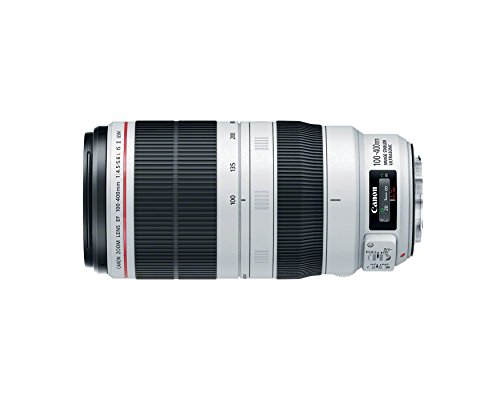
Best Telephoto Lens for Canon: Canon EF 100-400mm f/4.5-5.6L IS II USM
PROS
- Sharpness of the image is stellar
- Distortion is reasonably low in images
- Lens glass is dust and weather-resistant
- Lightweight and easy to hold as compared to other lenses
- Comes equipped with an adjustable zoom ring to stabilize the hand
CONS
- There is some level of lens creep
- Users found it to be a bit more expensive compared to others
- When shooting at high apertures, there is visible chromatic aberration
What Recent Buyers Report
The image stabilization feature of Canon EF 100-400mm f/4.5-5.6L IS II USM is fantastic and allows for amazing hand-held shots. The sharpness is of top-notch at every range, and the image quality is sharp and bright. The lens even has a macro ability that lets you take stellar close-up shots. Plus, its bokeh rendering is also creamy and natural.
Why it Stands Out to Us
This compact and sleek lens is packed with the most impressive features. Its zoom ring allows you to take images with accurate composition and superb balance. The Air Sphere Coating feature also eliminates ghosting and flare in the images, giving you clear images and consistent colors.
Who Will Use This Most
This lens has many capabilities that make it an ideal choice for many kinds of photography. However, it is designed particularly for wildlife photography. Nevertheless, its impressive features, such as bokeh rendering allows the lens to take wonderful portraits as well. It can also be used for nature photography in any place, as it is built for resistance to harsh conditions.
Bottom Line
If you’re on the hunt for the best telephoto lens for your Canon camera, it doesn’t get better than this. It is power-packed with functionality and performance. The high-quality exterior is built for durability, whereas the lens itself has many advanced features to make sure you make the most out of your photography skills.

- Compact, high performance L-series super-telephoto zoom makes it ideal for sports and wildlife...
- Rotation-type zoom ring allows for more precise composition and excellent balance when handholding
- Improved zoom torque adjustment ring allows easy setting of zoom tension, Focal Length & Maximum...
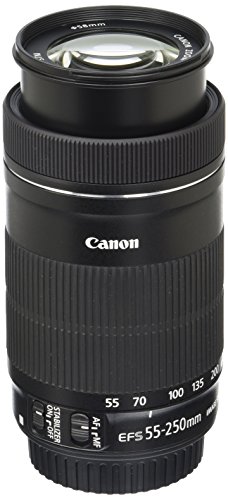
Best Telephoto Lens for Canon 70D: Canon EF-S 55-250mm F4-5.6 IS STM
PROS
- Design is light and compact for traveling
- Comes with a whopping 4.5X zoom range
- Equipped with an STM motor for high performance
- Sharpness of the images that it produces is impressive
- UD lens element embedded to eliminate chromatic aberration
CONS
- Aperture is just average
- Lens hood is not available with the lens
- Mount is made of plastic and can break
What Recent Buyers Report
This is truly an impressive telephoto lens. The quality of the images in this Canon EF-S 55-250mm is sharp, and the lens itself is quite petite and light to hold and carry around wherever you go. The stepping motor embedded in it allows the pictures to be more accurate and clear, which is also a plus point for photographers.
Why it Stands Out to Us
The lens is superb and packs quite a punch for its price. It has a newly improved CPU and better auto-focus algorithm that speeds up the focusing and allows for enhanced performance and better-quality images. The UD element in it also takes care of any chromatic aberration in the images.
Who Will Use This Most
This lens is ideal for those photographers who are more versatile and like to take pictures of a lot of things. It is also a good investment for photographers who are into videography. If you’re a non-professional or a semi-casual photographer, then this lens is an excellent addition to your kit.
Bottom Line
Are you looking for a telephoto lens for your Canon 70D? Then this is the one for you! Its impressive features and high-quality image results will definitely leave you stunned. With its high performance and low price, you will get the value of your money and find yourself thoroughly impressed with it.
- High magnification, compact and lightweight EF-S telephoto zoom lens with Image Stabilization for up...
- One UD lens element reduces chromatic aberration throughout the zoom range, for excellent image...
- New six-group zoom system provides a compact design while achieving a maximum magnification of 0.29x...
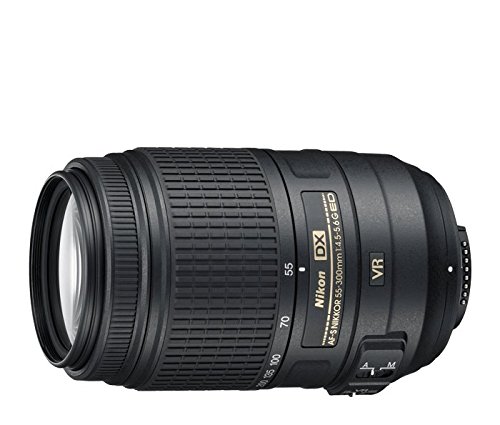
Best Telephoto Lens for Nikon D3300: Nikon AF-S DX NIKKOR 55-300mm f/4.5-5.6G
PROS
- Lightweight and easy to hold
- Zoom range is an impressive 5.5X
- Auto-focus system is silent, fast and accurate
- Equipped with two ED elements to minimize chromatic aberrations
- Equipped with VR Image stabilization feature in order to reduce blurriness
CONS
- Bokeh rendering is average
- Mount is made of plastic rather than metal
- AF-P mount is not compatible with older Nikon cameras
What Recent Buyers Report
Nikon AF-S DX NIKKOR 55-300mm lens provides great value for the amazing features that it provides. It has a decent build, super-fast auto-focus that focuses on subjects accurately and a very impressive focal range. There is little to no chromatic aberration, and its photos are sharp and clear. Overall, it’s a bang for the buck.
Why it Stands Out to Us
This lens is equipped with an HRI element and two ED elements that let you capture faraway subjects easily, without being close to them. Its VR image stabilization feature also allows you to take stellar hand-held shots, without any blurring in the images. It is also great for video shooting.
Who Will Use This Most
Novice photographers who are into travel or portrait photography will find this lens to be really useful. It is also a great buy for those photographers who like to capture subjects from a far-away distance, such as bird or moon photography. Overall, it is a versatile one, which works best for Nikon D3300.
Bottom Line
This is an ideal lens for any Nikon DX camera. You can get amazing landscape photos and photos of birds and other moving objects. For the price, it is packed with a number of impressive and high-quality features that make this lens an amazing investment.

- 5.5x Telephoto Zoom lens,Filter Thread: 58 mm
- Nikon VR Image Stabilization; Tripod Detection Mode, Focal Length Range : 55 -300 mm, Minimum Focus...
- HRI (High Refractive Index) Lens Element
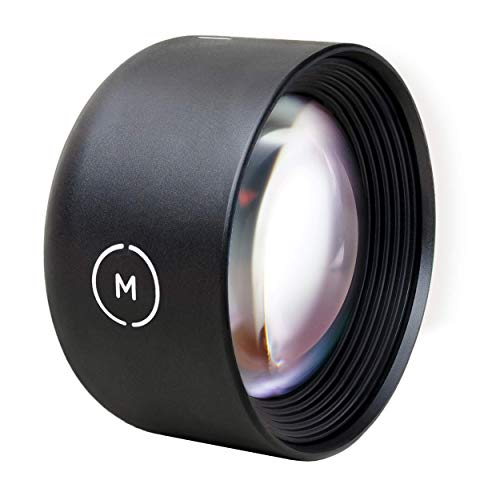
Best Telephoto Lens for iPhone: Moment – Tele 58mm
PROS
- Small and lightweight for a lens
- Build quality is impressive and sturdy
- Works amazing with single-lens portrait mode
- Affordable option to experiment with telephoto lenses
- Produces the sharpest images that you can get in a phone
CONS
- Color renditioning is average
- Keeping the lens clean is quite challenging
- Mounting plate is a little difficult to use and get the hang of
What Recent Buyers Report
Moment - Tele 58mm lens is perfectly made, and the design is quite sleek and sturdy. Its image quality is superb, considering the image is taken using a phone. It fits very snugly on iPhones and is made with high-quality materials to ensure durability and longevity. Overall, it captures amazing shots.
Why it Stands Out to Us
This lens ensures the sharpness of the image from edge to edge. It allows you to capture more detail and objects into the same frame on your phone. It provides a whopping 4x zoom that lets you take sharp photos of close-up objects. It is really an amazing addition to your iPhone if you are into telephoto lenses.
Who Will Use This Most
This lens is used for almost all kinds of photography on an iPhone. It is also used for 4K filming and is a great choice for portrait photography on your iPhone. If you want to take close-ups of faraway subjects, then investing in it will be beneficial for you.
Bottom Line
Overall, you will be thoroughly surprised by what this lens has to offer. With its sturdy build and sleek finish, to its extremely sharp images and creamy bokeh, this is one lens that is a must-have for any photography enthusiast who owns an iPhone.
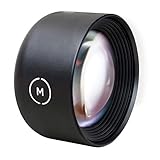
- The Moment 58mm Tele Lens works with iPhone and Android phone cameras, as well as iPads, Tablets &...
- Take next level photos and videos. Mount your lens with a Moment Case or M-series lens mount. Works...
- High-quality lens glass delivers edge to edge sharpness, while bringing you 2x to 4x closer to the...
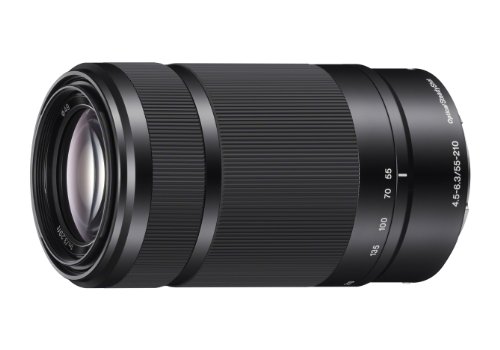
Best Telephoto Lens for Sony A6000: Sony E 55-210mm F4.5-6.3
PROS
- Telephoto reach is amazing
- Non-rotating focus ring allows for precise image focus
- Light and compact design, which ensures easy manageability
- Whopping 3.8x zoom range, which allows for better versatility
- Optical stabilization feature lets you take sharp images each time
CONS
- Tends to extend while focusing
- Weather sealing is not included
- Aperture is slow at the wide end
What Recent Buyers Report
The performance and versatility of Sony E 55-210mm are phenomenal. There is excellent sharpness in the center of the image, and the built-in OSS feature aids you in taking high-quality shots or videos at slower shutter speeds. Its construction and build lens are also durable and sturdy. Overall, it is a great lens for the Sony A6000.
Why it Stands Out to Us
Equipped with numerous advanced features, this is a serious competitor in the telephoto lens market. The ED lens element embedded in it lets you take photos that are free of chromatic aberration, and aspherical lens elements maintain the sharpness and color contrast of the images.
Who Will Use This Most
The lens is suitable for photography of moving objects and is specifically ideal for sports photography. It’s also a great choice for photography enthusiasts who like taking pictures of nature and of tiny animals or plants. Moreover, it is also a good lens if you want to capture videos.
Bottom Line
With the highest quality features and a reasonably low price, this lens definitely provides a bang for the buck. If you’re a beginner or a novice, you will be thrilled to use it on your Sony A600 because of its excellent image quality and stabilization feature that doesn’t blur your hand-held shots.

- Wide zoom range (82 - 315mm 35mm equivalent) ideal for sports or nature;Aperture blades : 7
- Internal focusing for smooth, quiet operation - perfect for video capture.Direct manual focus with...
- Optical Steady Shot image stabilization for stable video capture and low light performance
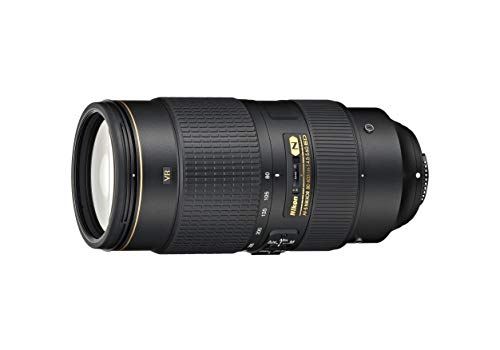
Best Super Telephoto Lens: Nikon AF-S FX NIKKOR 80-400mm f.4.5-5.6G
PROS
- Compatible with teleconverters (optional AF-S)
- Nano Crystal Coating reduces flare
- Silent Wave Motor offers quick and fast auto-focus with full-time manual focusing
- Vibration Reduction image stabilization feature minimizes blurriness even in low light conditions
- Equipped with one super ED lens element and four ED elements to minimize color fringing and chromatic aberrations
CONS
- Hood is poorly designed
- Sharpness dims at the 400mm range
- A bit heavy to hold and carry around
What Recent Buyers Report
The size and performance of Nikon AF-S FX NIKKOR 80-400mm f.4.5-5.6G are stellar. It renders amazing images and makes them super sharp and clear. The contrast in colors is phenomenal, and the 9-blade diaphragm allows you to capture a shallow depth of field. Most photographers also found the zoom lock feature quite useful.
Why it Stands Out to Us
Whichever type of photograph you take, this lens will leave you stunned. The VR technology allows for sharp images and stellar HD videos. The auto-focus is fast and silent, which is great for professional events. It is not only compact, but also super versatile, and can capture dazzling images from far away or up close.
Who Will Use This Most
The beauty of this lens is that it is flexible for any kind of photography. Not only is it good for wildlife or sports photography, but it also captures the most beautiful portraits. It is an excellent choice for action photography because of its fast auto-focus. It is also great for formal or environmental portraits, as well.
Bottom Line
Looking for the ultimate super-telephoto lens? Then this is your last stop. Not only is this lens jam-packed with performance, but it is also highly versatile and a great investment for any kind of photography that you can think of. The features, functionality, and results of this phenomenal lens will exceed your expectations.
- FX format compatible. Mount Type Nikon F Bayonet
- Focuses as close as 5.7 feet during AF operation
- Vibration Reduction
Comparison Chart of the Best Telephoto Lenses
What is a Telephoto Lens, and What Does it Do?
A telephoto lens is constructed to capture images of subjects that are in the far distance. They’re long-focus lenses that are manufactured so that the focal length is longer than the actual lens. This makes them much lighter and easier to hold while also successfully meeting long-range capabilities.
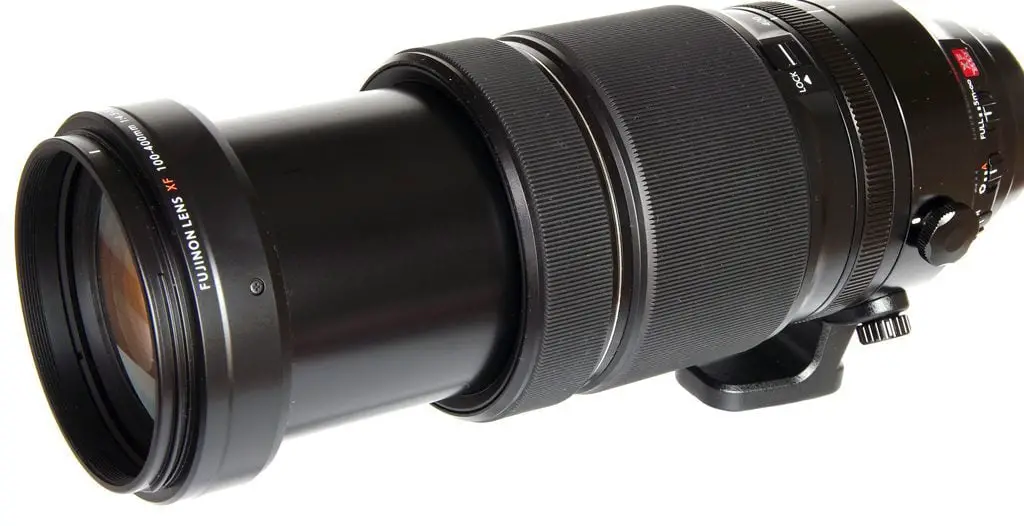
Telephoto lenses are more popular for wildlife or sports photography, or in any other place where it is kind of impossible to be super close to the subject. These lenses are also used for moon photography, as that is certainly one subject that needs to be captured from a distance.
How to Choose a Telephoto Lens
In order to choose the perfect telephoto lens for your photography needs, you need to consider a few things. Here are some of the key features that you should look for when deciding which telephoto lens to buy:
Prime Lens
The first thing you need to check when buying a telephoto lens is if you require a zoom or a prime lens. A prime lens is one where the focal length is fixed. They have a wider aperture than a zoom lens, which means they let more light in the sensor.
Zoom Lens
Zoom lenses help with the composition and are good for shooting fast-moving objects. Investing in a good zoom lens will aid you in getting the best close-up shots according to your zoom preferences. If the telephoto lens comes with a teleconverter, it makes the lens far more versatile than others.
Budget
If you are a fairly new photographer, then you do not need to up your budget and get an expensive telephoto lens. However, if you are a professional photographer, then you may need a lens with more features and better build quality. This also depends upon the nature of photography that you are into.
Pros and Cons of Telephoto Lenses
Now that you’ve gone over the review, let’s look at some of the benefits and drawbacks of owning a telephoto lens.
Pros
Let’s go over the advantages of a telephoto lens first:
Proximity
Telephoto lenses are an amazing investment if you want to capture subjects that are far from you. They bring the subjects closer in proximity in the frame and capture every detail.
Portraits
Since telephoto lenses are amazing at capturing detail, it makes them an ideal addition for portrait photographers. The 70-105mm range is a popular one for portrait photography as these lenses tend to produce silkier and more natural bokeh.
Flexibility
A telephoto lens also offers you with the choice of moving close to the subject without actually moving from your actual spot, or take a picture from a distance. This allows for more flexibility and versatility of photography.
Cons
Even though there are positives, there are a few drawbacks of owning a telephoto lens:
Fast Shutter Speed
Even if you own a tripod, you need to have a shutter speed slower than 1/200th of a second to make sure that your image is stabilized and not blurry. This also means that your lenses sensor needs to capture more light, which may be impossible at night-time.
Weight
Telephoto lenses are built with more elements and require more materials, which is why they tend to be heavier than a standard lens. This makes it hard for photographers to carry it around for longer periods of time.
How to Use a Telephoto Lens
Now that you’ve learned the drawbacks and benefits of a telephoto lens, it’s time to teach you how to use one. There is a more detailed guide in the video link below, but here is the instruction manual summed up:
- Put your camera/DSLR on manual mode. This will completely change the way you take pictures. However, for this, you need to understand ISO, shutter speed, and aperture settings and how to set them.
- You need to shoot at a faster shutter speed than your focal length. If you’re shooting at a 300mm focal range, your shutter speed should be at least 1/300th of a second to prevent your pictures from shaking or being blurry.
- If you’re in good lighting, fast shutter speeds or aperture does not matter as much as if you’re indoors. For this, you need to amp up your ISO. This may, however, add some noise in your photographs.
- Always try to use a tripod or monopod when zooming at a 250mm-300mm range. This will add a lot of stabilization to your pictures and will sharpen the quality of the image immensely.
Hopefully, this instruction guide was useful. If you need a more detailed version of the instructions, then check out the following video.
People Also Ask
If you still have some queries or concerns, then you can look at this portion to solve a few of your ambiguities and get them sorted out:
Which is Better Telephoto or Zoom Lens?
Telephoto lenses allow you to take pictures of subjects from a faraway distance without getting closer to them, while zoom lenses have more versatility and can zoom closer or further. A zoom lens can maneuver between different focal lengths, but telephoto lenses can offer the photographer a much longer reach.
When Should I Use a Telephoto Lens?
You should use a telephoto lens when you want to capture something that is really far away, and getting near them is dangerous or impossible. For example, if you want to capture a dangerous snake or the moon, you will need a telephoto lens to shoot these subjects with clarity without actually moving towards them.
Is a Telephoto Lens Good for Portraits?
Yes, a telephoto lens can take portrait images with excellent detail and high-quality blurred backgrounds. A telephoto lens can also help in reducing distortion when taking portraits as they allow more light to be captured in the sensor and better color renditioning. Overall, telephoto lenses can capture some of the most beautiful portrait photographs.
Can You Use a Telephoto Lens for Macro?
A telephoto lens may not be able to fully give you that near-macro photography experience like a standard macro lens can, which is being one-to-one with your subject. However, you will be able to test out whether macro-photography is something you would be interested in without actually purchasing its own lens.
Conclusion
This article was meant to guide you into choosing a telephoto lens regardless of which camera you use. Getting a new lens can be a tricky task, so hopefully, this guide provided you some insight into choosing the right one and made your challenging decision a bit easier. Good luck and happy shopping!